Process Optimization: Scalable Google Docs to PDF Conversion with No-Code Tools
The Time Drain of Manual Document Creation
Countless hours spent populating contracts and forms manually cost businesses efficiency. Implementing strategic process optimization allows companies to replace these manual steps with streamlined, digital workflows, preventing financial losses and damaged relationships caused by typos, missing clauses, or outdated information. This is particularly impactful for fast-paced Israeli businesses in sectors like logistics and banking where document accuracy is mission-critical.
Common Manual Process Pitfalls
- Excessive copy-pasting
- Inconsistent formatting
- Omitted critical fields
- Slow regulatory adaptation
Identifying Key Workflows for Process Optimization
To achieve meaningful process optimization, Israeli firms must first identify repetitive, high-volume tasks that are prone to human error. Document generation—such as invoicing, legal contracts, and shipping manifests—is the ideal starting point. By mapping out the journey of a document from data entry to PDF finalization, businesses can spot bottlenecks where manual intervention slows down growth. Utilizing tools like n8n and Google Apps Script ensures that these processes are not just automated but integrated deeply into the existing software stack, providing a seamless flow of data across the organization.
Process Optimization: Revolutionizing Your Document Workflow
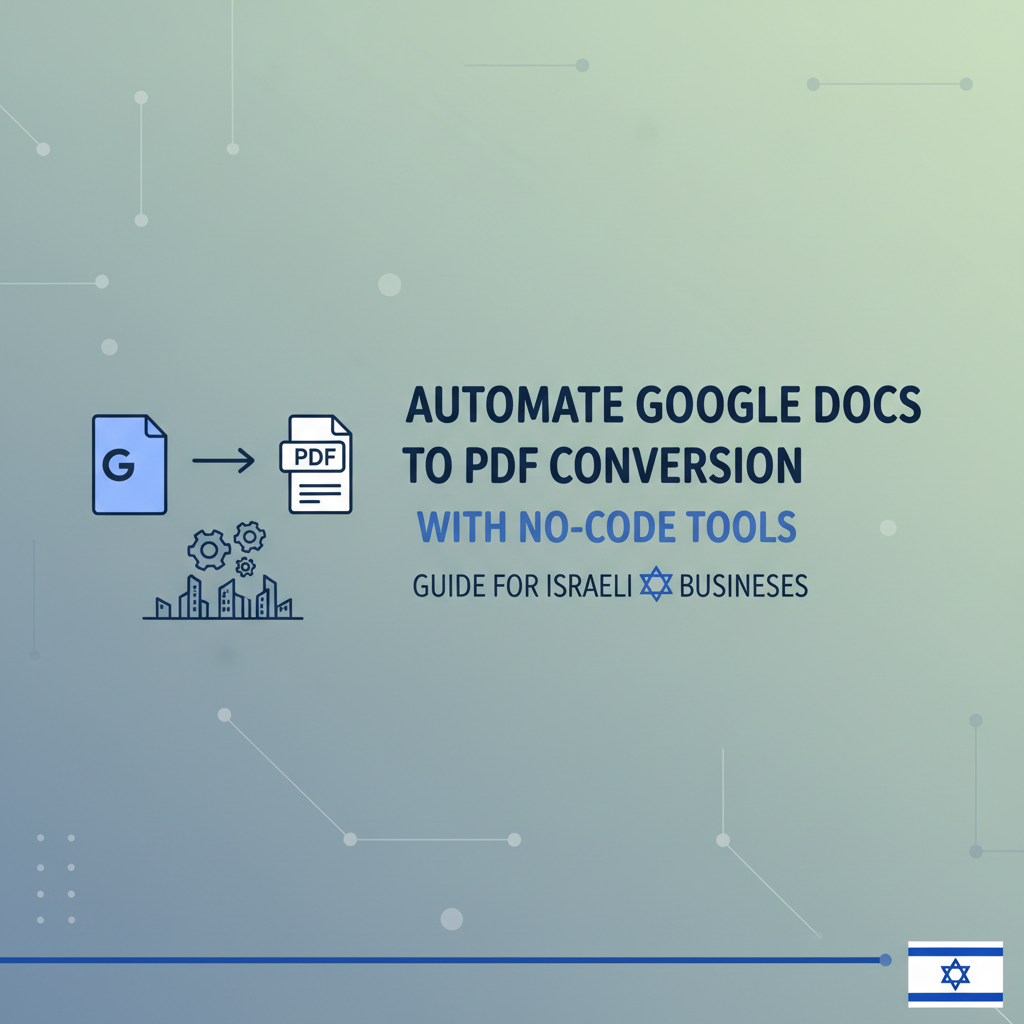
Transform static Google Docs templates into dynamic PDFs instantly using platforms like does.center combined with n8n and Google Apps Script. This integration eliminates manual entry while ensuring logical document structure through conditional logic - a solution increasingly adopted by Israeli hospitals and research institutions for compliance-heavy documentation.
Core Benefits of Automated Workflows
Why Process Optimization is Essential for Scaling
In today's competitive landscape, Business Process Automation is no longer optional for companies aiming to scale their operations without increasing headcount. By removing the human element from repetitive tasks like PDF generation, organizations can redirect their talent toward creative problem-solving and strategy. For Israeli firms operating in the global market, automation ensures that documentation remains compliant with international standards without increasing administrative overhead.
Time Savings Beyond Expectations
Generate polished PDFs in minutes instead of hours, freeing capacity for high-value tasks.
Zero-Tolerance Error Policy
Conditional logic removes typos, incomplete sections, and compliance risks automatically.
Template Flexibility at Scale
Drop new templates into Google Drive for instant system integration – deploy NDAs, leases, or proposals effortlessly.
Code-Free Implementation
Freelancers and teams alike can launch without technical expertise through intuitive interfaces.
Automated Document Solutions in Action
For Freelancers & Consultants
Generate client contracts with updated clauses in seconds, reducing revision cycles.
Startups Scaling Smartly
Manage investor agreements and employment contracts without legal oversights.
Enterprise Team Efficiency
Standardize approvals and submissions across departments with cloud-based workflows.
High-Volume Mastery
Onboard unlimited clients without quality degradation through automated scaling.
The ROI of Process Optimization in the Israeli Market
In the local high-tech and logistics sectors, the return on investment for Business Process Automation is visible almost immediately. Beyond the direct reduction in administrative labor costs, BPA provides a robust framework for compliance and risk management. For instance, when a legal firm automates its NDA generation, it ensures that every document adheres to the latest regulatory standards without requiring a manual review for each draft. This scalability allows Israeli startups to compete globally, maintaining high standards of document professionalism and speed that are expected in international markets.
Measuring Success in Process Optimization
When Israeli businesses pivot toward process optimization, measuring the right metrics is vital for long-term success. Key Performance Indicators (KPIs) such as cycle time reduction, error rates per batch, and employee hours reclaimed per week provide a clear picture of how document automation affects the bottom line. By analyzing these data points, management can identify whether the shift from manual Google Docs handling to automated PDF generation is meeting efficiency targets. Optimization is not a one-time setup but a continuous cycle of monitoring, identifying friction points, and refining the workflow to ensure peak operational performance.
How the Automation Engine Works
- Bot collects data via conversational interface
- Google Apps Script populates template fields
- Conditional blocks skip irrelevant sections
- Instant PDF generation for signing
By prioritizing Business Process Automation (BPA), developers at does.center have optimized these workflows to handle complex document requirements common in local business environments.
Real-World Implementation Examples
Real estate agencies dynamically insert lease terms while SaaS startups customize subscription contracts through embedded logic. Similar approaches help Israeli logistics companies maintain shipping documentation at scale.
Launch Your Automated Workflow
A free step-by-step guide reveals how to configure does.center with n8n and Google Apps Script, customize templates, and implement conditional logic tailored to Israeli business needs.
The Strategic Advantage of Business Process Automation
Reduce administrative burdens while improving document consistency – crucial for client trust and risk reduction in high-stakes environments like Israeli financial and healthcare sectors.
Conclusion: Future-Proof Your Paperwork
Embrace process optimization to transform Google Docs into flawless PDF generators. Reclaim hours for innovation while ensuring every document meets perfection standards - an essential upgrade for Israeli businesses competing in global markets.