AWS Networking Architecture: Solving Overlapping IP Issues with ARR
Introduction to ARR and Cloud Network Routing
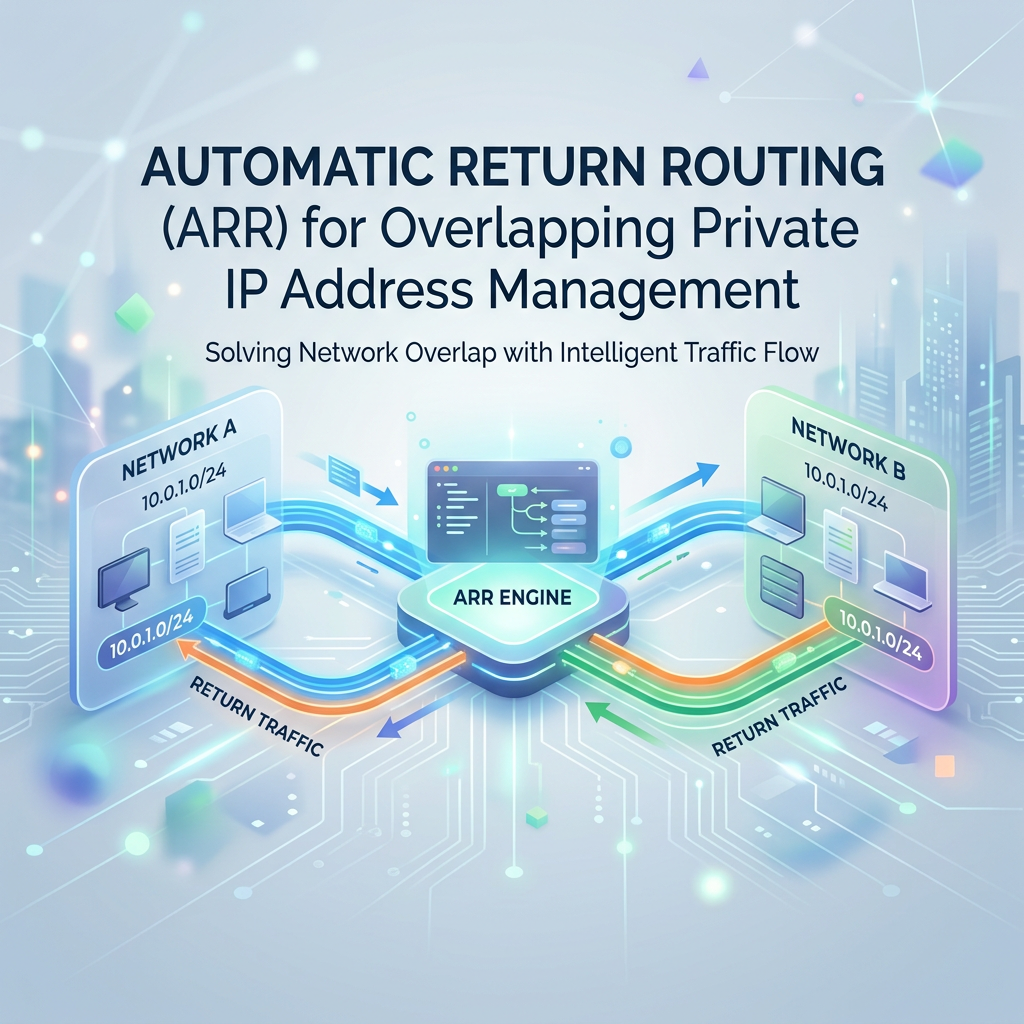
In today’s dynamic environment, a robust הגדרת רשת פרטית (private network setup) and ניתוב רשתות בענן (cloud network routing) have become critical pillars for enterprise success. Organizations face complex challenges, particularly when managing overlapping subnets within their ניהול רשתות strategies. In a standard AWS networking architecture, traditional routing mechanisms often struggle to distinguish routes when the same private address appears across multiple VPCs or network segments, making holistic ניהול רשתות a significant hurdle for growing IT departments. To overcome this, the innovative Automatic Return Routing (ARR) approach has emerged, employing stateful flow tracking within userspace to ensure return traffic follows the correct originating tunnel without manual configurations like Network Address Translation (NAT) or Virtual Routing and Forwarding (VRF). ARR’s applicability is central to ניתוב רשתות בענן for various markets, including Israeli businesses. Automation providers such as does.center utilize ARR concepts to streamline complex network operations and enhance security in multilayered infrastructures.
The Evolution of AWS Networking Architecture and Cloud Routing
As enterprises migrate workloads to hybrid environments, the complexity of ניתוב רשתות בענן (cloud network routing) increases exponentially. Traditional methods of handling הגדרת רשת פרטית (private network setup) involving overlapping IP addresses through NAT or complex VRF tables are becoming obsolete due to their lack of scalability. Automatic Return Routing (ARR) provides a dynamic alternative that aligns with the needs of modern automation. By decoupling the routing logic from the kernel and placing it in the userspace, ARR allows for a more granular approach to traffic management. This is particularly vital when multiple VPCs or remote branches use identical subnets, as ARR can distinguish between sessions based on the specific ingress tunnel, ensuring data integrity across the entire cloud fabric.
Integrating Transit Gateway within AWS Networking Architecture
A critical component of modern AWS networking architecture is the AWS Transit Gateway (TGW). While TGW simplifies the interconnection of hundreds of VPCs and on-premises networks, it does not natively solve the issue of overlapping CIDR blocks without complex NAT configurations. This is where Automatic Return Routing (ARR) complements the architecture. By integrating ARR-enabled instances as inspection or routing nodes within the TGW fabric, architects can maintain seamless communication between environments that share identical IP ranges. This combination allows for a centralized ניהול רשתות strategy that is both scalable and resilient, reducing the overhead typically associated with managing massive routing tables in a distributed AWS environment.
Strategic Considerations for AWS Networking Architecture
When planning a modern הגדרת רשת פרטית (private network setup), architects must look beyond simple subnet allocation. The strategy must account for potential growth, cross-cloud connectivity, and the inevitable overlap of IP ranges when merging infrastructures or acquiring new entities. By implementing ARR within the initial setup phase, organizations can bypass the limitations of static routing tables. This proactive approach to network definition ensures that even if subnets clash, the system remains resilient. Automation tools like those provided by does.center facilitate this by abstracting the complexity of the underlying ניתוב רשתות בענן, allowing teams to focus on service delivery rather than troubleshooting connectivity issues.
Optimizing VPC Design for High-Scale Automation
When designing an AWS networking architecture, automation must be a primary focus. Static configurations are prone to human error, especially when handling complex ניתוב רשתות בענן. By leveraging userspace-driven routing solutions like ARR, organizations can automate the detection and handling of new network segments. This software-defined approach ensures that as new VPCs are spun up—even those with legacy overlapping IPs—the core network infrastructure automatically adapts to route return traffic correctly. This level of automation is essential for maintaining agility in CI/CD pipelines and large-scale SaaS deployments where network resources are constantly being created and destroyed.
AWS Networking Architecture Challenges with Overlapping Subnets
Many large organizations deploying a global AWS networking architecture encounter overlapping IP subnets due to identical private IP addresses in different VPCs or remote offices or remote offices. This overlap can cause misrouting as traditional routing tables cannot easily differentiate between multiple instances of the same IP address space. ARR addresses this by tracking the state of each data flow, tagging packets as they depart and ensuring returning packets use the identical pathway. In Israel, these challenges are solved through effective ניתוב רשתות בענן and robust ניהול רשתות practices, which are especially relevant for enterprise sectors including banks, hospitals, and logistics companies.
How ARR Works: Stateful Flow Tracking
ARR continuously observes interface and session details of data packets, building an in-memory communication session map. When return traffic begins, ARR references this state map instead of ambiguous static routing tables, thereby accurately pinpointing return routes even with multiple tunnels or overlapping addresses. This dynamic routing mechanism reduces errors and administrative workload, a benefit that automation providers like does.center emphasize when deploying solutions for complex network ecosystems in Israeli organizations.
Cloud Network Routing Benefits in Distributed Environments
For organizations utilizing cloud services, virtual offices, or hybrid environments, ARR enhances security and reliability by precisely managing data return paths. When used with secure VPN tunnels in a ניתוב רשתות בענן framework, ARR’s stateful tracking guarantees replies and acknowledgments return through the correct tunnel, ensuring high-performance ניהול רשתות.
Advantages of Userspace-Driven Routing
ARR's userspace implementation offers flexibility not found in kernel or hardware-based routing solutions. It allows easier updates, debugging, and customization as network demands evolve. This rapid adaptability is essential in industries requiring timely responses such as financial services and healthcare, including Israeli research institutions that often operate in fast-changing network scenarios demanding high stability and security.
Scalability and Visibility in Modern ניהול רשתות
Visibility is the cornerstone of effective ניהול רשתות. Without a clear view of data flows, troubleshooting overlapping IPs becomes a nightmare for DevOps teams. ARR provides this visibility by tracking every session in the userspace, allowing for real-time monitoring and logging of traffic paths. This transparency is crucial for security audits and performance tuning. As your network grows, this userspace-driven model scales effortlessly, ensuring that ניתוב רשתות בענן remains efficient regardless of the number of connected branches or cloud providers in use.
The Role of Automation in Modern Private Networks
Modern enterprise environments require a shift from manual configuration to programmatic execution. In the context of הגדרת רשת פרטית, automation ensures consistency across all layers of the stack. By utilizing Automatic Return Routing (ARR), the automation layer can dynamically handle flow tracking without human intervention. This is particularly critical for SaaS providers and large-scale enterprises in Israel, where rapid deployment and high availability are non-negotiable. Integrating these advanced routing methodologies into your standard operating procedures minimizes the risk of network-wide outages caused by configuration drift.
The Strategic Impact of ניהול רשתות Automation
In the landscape of modern IT, ניהול רשתות (network management) has transitioned from a manual maintenance task to a strategic business driver. Automated systems that leverage ARR allow for a hands-off approach to connectivity, where policies are defined at the software level and executed across thousands of nodes. This shift not only reduces human error but also ensures that the הגדרת רשת פרטית remains consistent across multi-cloud and on-premise environments. By adopting these automated frameworks, organizations can achieve a level of operational agility that was previously impossible with legacy routing protocols.
Reduced Administrative Overhead and Increased Stability
Manual NAT or VRF configuration increases risk of error and consumes resources. ARR automates return traffic routing by inherently understanding packet flow direction and session context, reducing misrouting risks and helping maintain operational stability, crucial for avoiding service disruptions.
Automation in הגדרת רשת פרטית and Cloud Routing
Effective ניהול ip פרטית (private IP management) is no longer a manual task; it is a core part of an automated הגדרת רשת פרטית. Integrating ARR into an automation pipeline allows network architects to deploy new environments without worrying about IP conflicts. Platforms like does.center leverage these routing methodologies to provide a seamless experience for end-users, where the underlying complexity of ניתוב רשתות בענן is abstracted. This level of automation ensures that return traffic is always routed correctly, reducing the potential for human error and significantly lowering the time-to-market for new digital services. For Israeli enterprises, this means a more agile infrastructure that can adapt to global market shifts instantly.
Enhanced Troubleshooting and Diagnostic Visibility
ARR’s stateful flow tracking provides greater network visibility, simplifying the debugging process. Network engineers can more quickly identify disruptions or misrouted return traffic, improving resolution times and strengthening overall network resilience.
Real-World Use Cases and Integration
In multinational corporations with hybrid infrastructures, ARR integrates seamlessly to manage return traffic from multiple geographic locations without extensive reconfiguration. Its state tracking outside traditional kernel routing tables enables compatibility with diverse hardware and software environments, optimizing traffic management and reducing latency.
Improved Network Security and Data Privacy
ARR also enforces secure routing boundaries by ensuring return data remains within established tunnels, critical for industries handling sensitive information such as healthcare and legal sectors. This layer of security extends beyond addressing overlapping IP concerns, enhancing overall network defense.
Scalability and Future-Proof Networking
As networks expand in size and complexity, ARR’s stateful tracking scales naturally, dynamically adjusting routes and monitoring new tunnels. This future-proof solution maintains low latency and high throughput amid growing demands.
Simplified Deployment and Low-Risk Integration
Operating in userspace, ARR can be deployed with minimal disruption to active networks, allowing organizations to adopt the technology gradually. This low-risk integration makes ARR an attractive option for enterprises aiming to improve routing efficiency without costly infrastructure changes. In the Israeli context, this simplicity enables local companies and automation leaders like does.center to implement advanced routing solutions while maintaining continuous operations.
Conclusion
Automatic Return Routing represents a transformative approach to ניתוב רשתות בענן and managing overlapping private IP addresses by replacing static routing with stateful flow tracking. It simplifies return traffic routing, eliminates the need for manual NAT or VRF configurations, and enhances network reliability and security. Whether for securing multi-branch connectivity, optimizing VPN tunnels, or supporting distributed environments, ARR stands as an essential tool in modern enterprise networking, including within Israeli sectors where automation and scalable secure connectivity are increasingly critical.