Mastering Collaborative Content Editing: Real-Time Sync & Version Management
Core Features of Real-Time Data Synchronization and Versioning
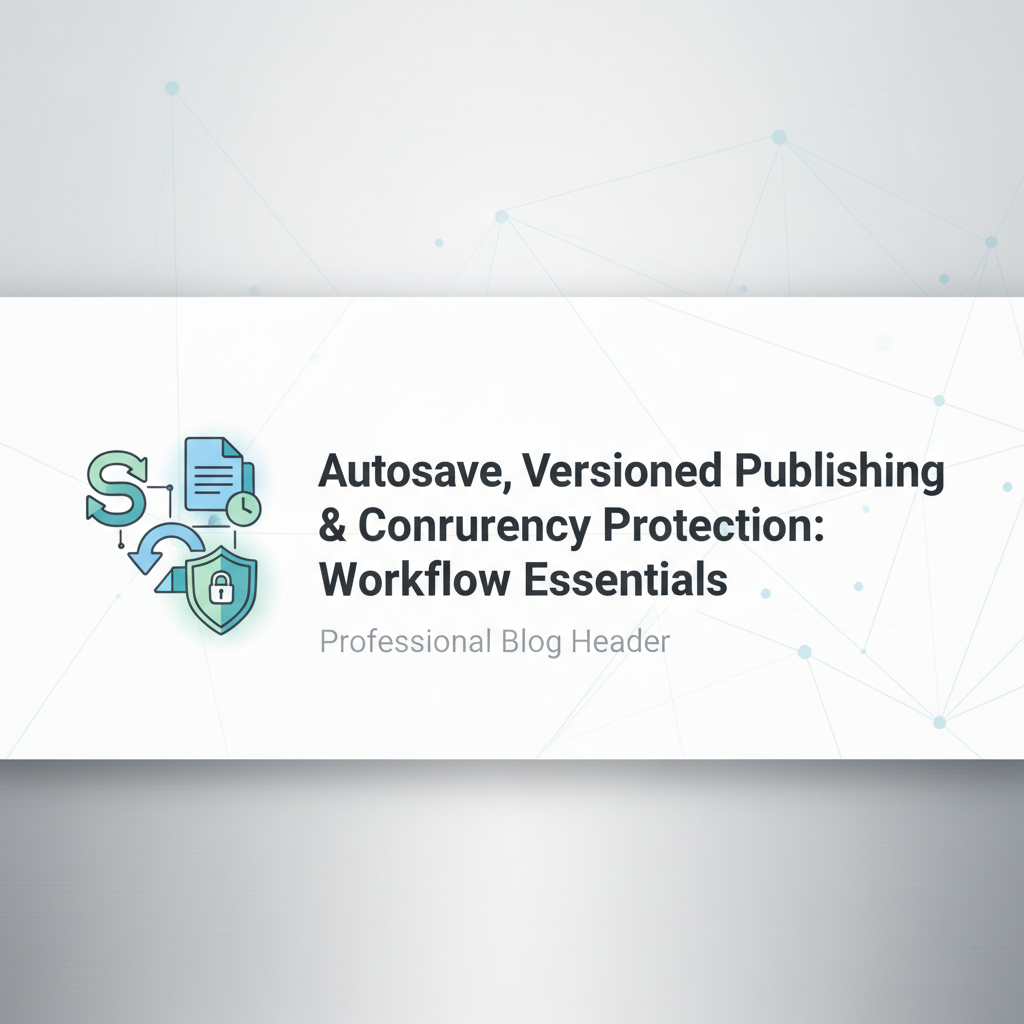
Modern software development thrives on robust Version Management through three transformative features: Real-Time Data Synchronization, Versioned Publishing, and Concurrency Protection. These safeguards prevent data loss while promoting accuracy in collaborative environments. Israeli tech leaders and automation experts like does.center recognize that effective collaborative content editing requires deep real-time data synchronization to optimize workflows in high-stakes sectors.
Autosave: Continuous Progress Protection
Autosave serves as the foundation for real-time data synchronization, eliminating manual saving by automatically recording changes. This prevents data loss during crashes or disruptions, acting as an automatic backup system for critical workflows. In Israel’s dynamic tech and automation industries, such continuous progress protection supports ongoing development activities and real-time operational adjustments.
Version Management & Publishing: Total Historical Control
Create audit-ready development timelines with explicit version checkpoints. Revert to stable iterations effortlessly and meet compliance standards through detailed change records. Israeli banks and hospitals often leverage versioned publishing to uphold stringent regulatory compliance and maintain secure, traceable data histories.
Concurrency Protection: Conflict-Free Collaboration
Prevent overlapping edits in multi-user environments. This system is the backbone of collaborative content editing, intelligently managing simultaneous contributions and eliminating overwrite risks. For Israeli logistics companies and software teams, concurrency protection combined with real-time data synchronization enables seamless cooperation across distributed teams and multiple time zones. Automation specialists like does.center integrate these protections to enhance synchronized operations and reduce conflict-related downtime.
The Evolution of Collaborative Content Editing in High-Stakes Environments
As digital transformation accelerates, the shift toward collaborative content editing has become a necessity rather than a luxury. In the Israeli tech ecosystem, where speed and precision are paramount, teams can no longer afford the delays of legacy check-out/check-in systems. Modern editing environments prioritize fluid interaction, allowing multiple stakeholders—from developers to marketing specialists—to contribute simultaneously without technical friction. This evolution is driven by the integration of real-time data synchronization and robust version management, ensuring that every change is tracked and every contributor is aligned.
By adopting a sophisticated approach to collaborative editing, organizations can foster a culture of transparency. When team members can see updates as they happen, the 'feedback loop' is drastically shortened. Automation platforms like does.center facilitate this by providing the underlying infrastructure that manages these complex interactions, ensuring that the 'single source of truth' is always maintained, regardless of how many users are editing the content at once.
Practical Implementation Examples
Optimizing Workflows for Instantaneous Data Integrity
Implementing real-time data synchronization requires a robust infrastructure capable of handling high-frequency updates without latency. This is particularly crucial in the Israeli tech ecosystem, where distributed teams often collaborate on complex SaaS and AI projects. By integrating synchronization directly into the version management lifecycle, organizations can achieve a 'single source of truth' that is updated instantly. This eliminates the 'stale data' problem that often plagues legacy systems, ensuring that all automated triggers and workflows are based on the latest available information.
Marketing Campaign Workflows
Agencies use Autosave-enhanced content management tools to maintain progress during unstable network conditions, protecting live campaign assets.
Software Release Management
Development teams employ centralized Version Management and Publishing to compare release candidates, accelerating bug resolution through historical snapshots and change logs.
Global Design Collaboration
Distributed teams leverage Concurrency Protection in collaborative design software to harmonize parallel updates across time zones without conflicts.
Strategic Benefits Across Industries
These features, centered around seamless collaborative content editing and real-time data synchronization, deliver 15-30% productivity gains by eliminating manual saves and merge conflicts. Industries with strict compliance standards particularly benefit from versioned audit trails and transaction integrity safeguards. Israeli banks and healthcare providers utilize these workflow enhancements to align with regulatory frameworks and ensure data security.
Financial and healthcare sectors implement real-time data synchronization to maintain data privacy and meet regulatory requirements through immutable change records and version management.
The Evolution of Version Management in Automation
Modern automation goes beyond simple backups; it requires a sophisticated approach to Version Management. As workflows become more complex, especially in the context of SaaS and AI-driven platforms, the ability to track every incremental change becomes vital. Efficient version management systems allow developers and project managers to branch out into new ideas without risking the stability of the production environment. For Israeli startups and established tech giants alike, this provides a safety net that encourages rapid iteration and innovation.
By implementing a structured version management strategy, organizations can reduce the 'blast radius' of potential errors. Instead of troubleshooting a massive monolithic update, teams can pinpoint specific version changes that may have caused an issue, leading to faster resolution times and higher system uptime. Does.center emphasizes these structural safeguards when designing custom automation for high-stakes industries.
The Synergy Between Real-Time Sync and Versioned Publishing
While real-time data synchronization ensures that every team member sees the most current state of a project, it must be balanced with Versioned Publishing to maintain stability. In high-speed automation environments, synchronizing every keystroke is vital for collaboration, but creating discrete 'versions' allows teams to establish milestones. This synergy ensures that while the work-in-progress is always updated in real-time, the production-ready assets remain protected and recoverable. For Israeli startups using platforms like does.center, this dual approach minimizes the risks associated with rapid deployment cycles.
Strategic Advantages of Unified Editing Workflows
The move to collaborative content editing offers significant strategic advantages beyond simple convenience. It creates a resilient operational framework where intellectual property is protected by continuous versioning and real-time sync. For SaaS providers and AI-driven startups, this means that the risk of 'knowledge silos' is reduced. Everyone works on the most current data, and the history of every decision is preserved through version management. This level of traceability is essential for meeting compliance standards and for scaling operations without increasing the likelihood of human error or data corruption.
Why Version Management is Critical for Compliance
In highly regulated sectors such as finance and healthcare, Version Management is not just a productivity tool—it is a legal requirement. Israeli banks and medical institutions must maintain immutable audit trails that document who changed what and when. A robust versioning system ensures that every published update is timestamped and attributed, creating a transparent history that satisfies both internal security audits and external regulatory bodies. This level of traceability is essential for maintaining data integrity and public trust in digital-first environments.
The Future of Workflow Integrity
Comprehensive Version Management, alongside Autosave and Concurrency Protection, represents the essential pillar for modern collaboration systems. Their implementation reduces technical debt while creating accountable, transparent development environments primed for innovation. In Israel, companies like does.center are at the forefront of incorporating these technologies into automation solutions that drive operational excellence.