Cloudflare’s Infrastructure Automation Strategy: Scaling Secure devops tools
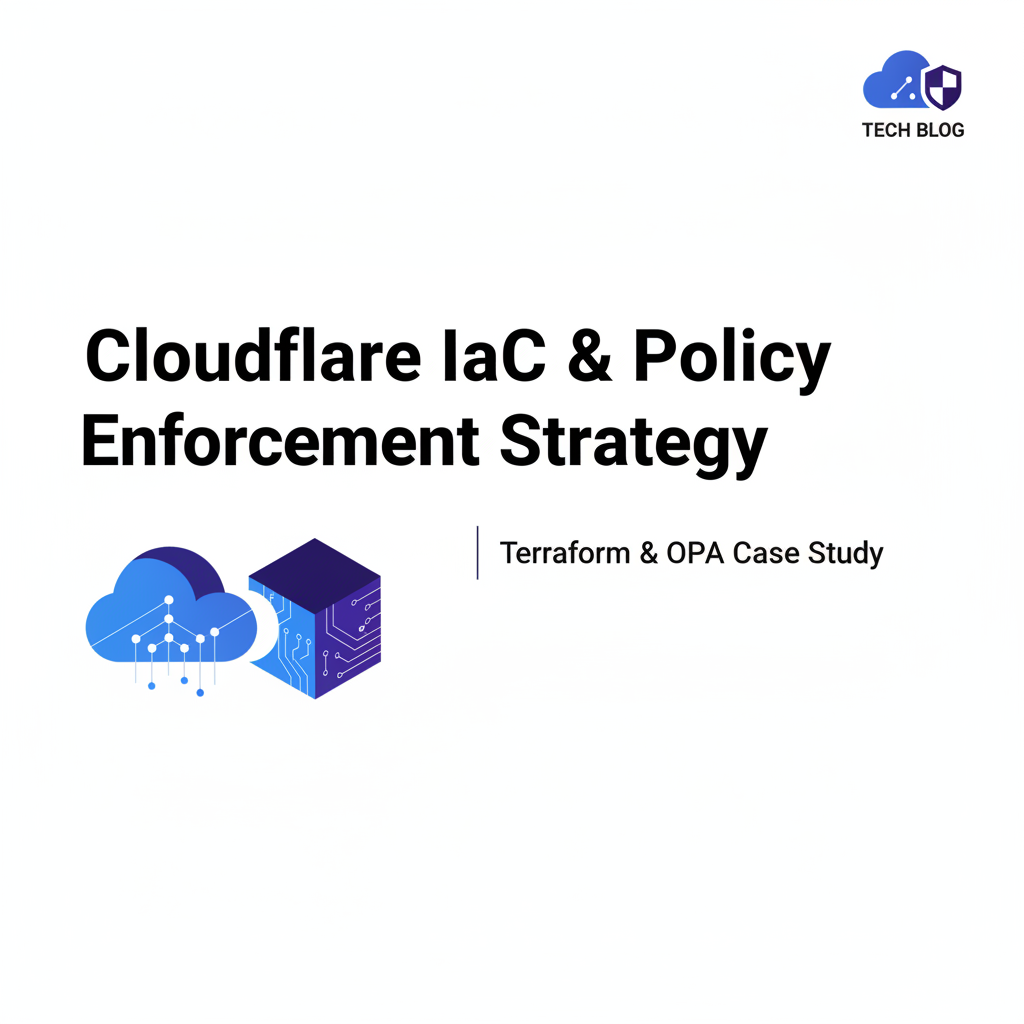
Cloudflare's evolution into an infrastructure automation powerhouse provides a definitive blueprint for modern, code-centric management. By maturing their automation workflows, they have created a resilient system for global scale. By combining Terraform, custom devops tools, and cloud compliance frameworks like OPA, Cloudflare achieves widespread infrastructure automation that eliminates configuration drift while ensuring auditability.
Terraform: The IaC Foundation
Terraform codifies networks, computess efficiency:
- Terraform defines networks, load balancers, and firewalls
- Custom tools apply organizational standards
- OPA ensures cloud compliance by validating security parameters pre-deployment
Selecting the Right devops tools for IaC
Choosing the right stack for infrastructure automation involves more than just selecting a configuration language; it requires a holistic view of the ecosystem. While Terraform remains the industry standard for provider-agnostic resource management, its power is amplified when combined with specialized devops tools for linting, testing, and security. For instance, incorporating automated testing frameworks ensures that the code representing your network remains resilient. Furthermore, the use of centralized state management and version control systems allows teams to treat infrastructure with the same rigor as application code, enabling rollbacks, peer reviews, and collaborative development across global offices.
Strategic Benefits of Infrastructure Automation
- Enhanced Collaboration: Shared IaC repositories break down team silos
- Improved Auditability:s platform showcase how localized tooling can help Israeli banks and logistics companies navigate these hurdles while preserving global IaC standards.
The Role of CI/CD in Infrastructure Automation
Effective infrastructure automation is inseparable from a robust CI/CD pipeline. For Cloudflare, this means that every Terraform plan is not just a manual execution but a stage in a larger automated workflow. By integrating devops tools directly into the version control process, teams can trigger automated tests, linting, and security scans before any physical resources are modified. This approach minimizes human error and ensures that infrastructure changes are as predictable and repeatable as software deployments. Furthermore, using automated pipelines allows for 'canary' infrastructure changes, where updates are rolled out to a small subset of the network to verify stability before a global release.
Scaling Cloud Compliance within IaC
As organizations scale their infrastructure automation implementations, maintaining consistent cloud compliance becomes a primary challenge that requires specialized devops tools. Cloudflare addresses this by integrating Open Policy Agent (OPA) directly into their CI/CD pipelines. This ensures that every piece of code defining the infrastructure adheres to corporate security standards before a single resource is provisioned. By treating policy as code, teams can automate the audit process, reducing the burden on security engineers while accelerating the development lifecycle. This integration of devops tools creates a proactive security posture, where violations are caught in the IDE or during pull requests rather than in a production environment.
Maintaining Cloud Compliance through Automated Guardrails
At the heart of Cloudflare's strategy is the use of 'Policy as Code' to enforce cloud compliance. By using OPA (Open Policy Agent), the automation engine can automatically reject infrastructure changes that violate security protocols—such as opening a restricted port or deploying unencrypted storage buckets. These automated guardrails are essential for maintaining a high security posture without slowing down development teams. Instead of waiting for a manual audit, engineers receive immediate feedback from their infrastructure automation tools, allowing them to fix compliance issues during the initial coding phase. This shift-left approach to security is a hallmark of high-performing DevOps organizations.
This infrastructure automation case study signals a broader industry shift toward policy-driven deployment models. By starting small and combining standard tools with custom extensions - an approach similarly employed by does.center for Israeli organizations - teams can achieve similar agility and security outcomes.