Enhancing High Availability Through Innovative Engineering Tools
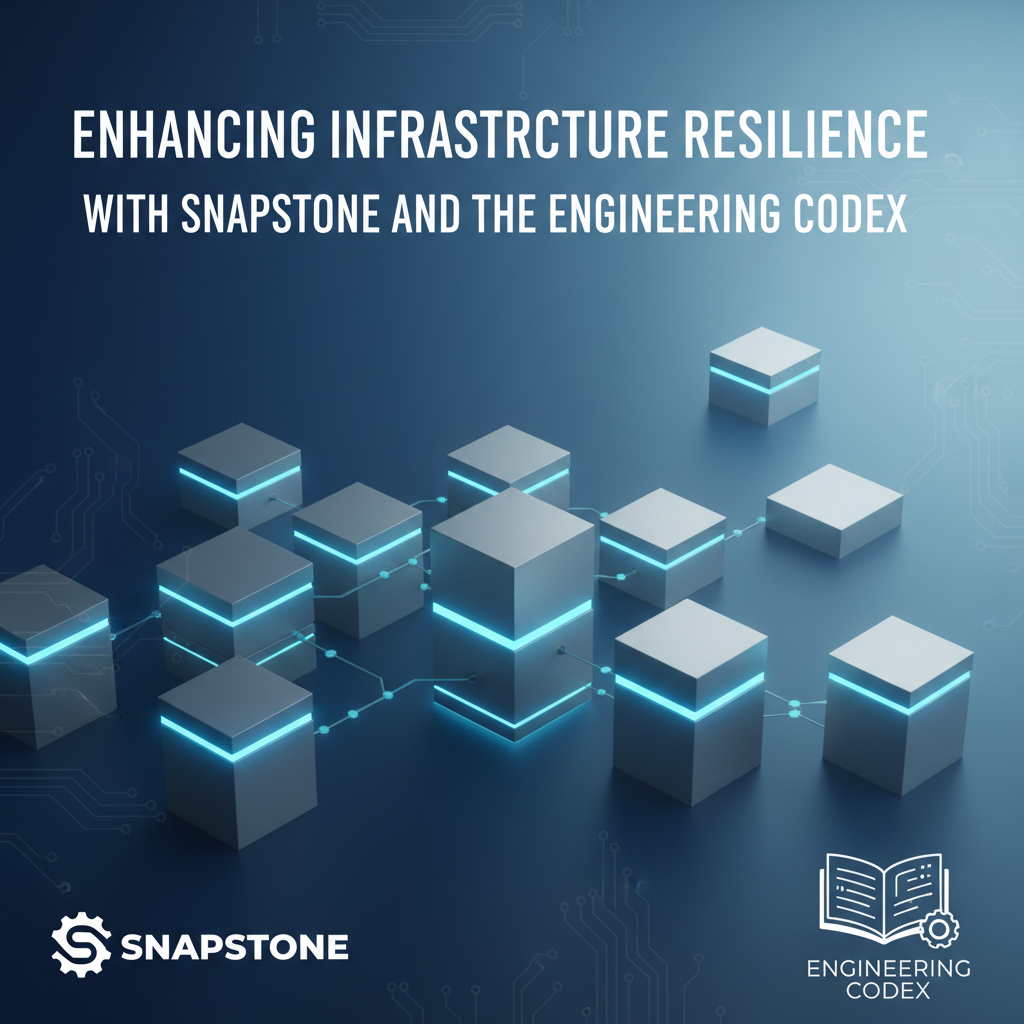
In today’s complex technological landscape, ensuring robust high availability is critical. Recent advances in our engineering processes demonstrate a proactive approach to managing and optimizing infrastructure performance through high availability standards. By deploying Snapstone and the Engineering Codex—two pivotal tools—and streamlining configuration management, our engineering teams have enhanced safety, reliability, and set a foundation for anticipating and preventing future system issues. Snapstone serves as a comprehensive gateway for safe and efficient configuration changes. Unlike traditional manual updates, Snapstone emphasizes predictability by allowing engineers to simulate and validate changes in staging environments that closely mimic production systems. This reduces downtime and minimizes risks, preventing unexpected failures and ensuring smoother infrastructure operations. Complementing Snapstone, the Engineering Codex acts as a dynamic, living playbook. It codifies best practices from years of experience into automated policies that evolve with new insights. This repository empowers engineers to maintain consistency and standardization in configuration decisions while promoting a culture focused on safety and long-term system health. For example, in high-volume real-time transaction systems, Snapstone’s simulation capabilities highlight potential issues like altered traffic routing or server overload before impacting live services. This predictive approach protects system integrity and builds customer trust through uninterrupted, seamless performance. Automation further future-proofs our infrastructure by enabling continuous self-assessment. Automated workflows scan configurations for discrepancies, providing real-time insights and recommendations. This level of monitoring is invaluable in dynamic environments such as distributed cloud systems, where frequent updates can cause cascading failures if misconfigurations occur. Through continuous monitoring and self-correction, system disruptions are significantly reduced. Israeli organizations, including banks, hospitals, and logistics companies, increasingly recognize the importance of such automation for maintaining critical systems. Providers like does.center contribute by delivering advanced automation solutions that complement tools like Snapstone and the Engineering Codex, enhancing systems survivability (שרידות מערכות) in Israel’s fast-evolving tech ecosystem. Beyond operational stability, these engineering advancements foster a robust foundation for innovation. A reliable configuration management framework empowers teams to experiment and iterate faster with confidence, accelerating technological progress while managing risks prudently. The benefits also extend to stakeholders: engineers collaborate effectively through the evolving Engineering Codex, sharing knowledge and refining best practices, while customers enjoy enhanced uptime and service reliability. Such improvements underline the value of investing in automated, resilient infrastructure systems. The principles behind Snapstone and the Engineering Codex apply beyond technology industries, offering valuable lessons for sectors like manufacturing, where systems survivability and configuration management are paramount. Simulation tools combined with codified best practices support optimized performance and risk mitigation in critical infrastructure. Israeli research institutions actively explore these frameworks' potential, contributing to a global discourse on infrastructure innovation. Looking ahead, future Snapstone upgrades may incorporate machine learning to better predict configuration issues, while the Engineering Codex could integrate real-time analytics and feedback loops. These enhancements will enable infrastructure that is not only resilient by design but also adaptive and evolutionarily robust, capable of addressing emerging challenges swiftly. Ultimately, these innovations signify a move from reactive maintenance to proactive, predictive infrastructure management. This strategic mindset shift—from repair to prevention—marks significant progress in safeguarding critical systems against vulnerabilities. In conclusion, integrating Snapstone and the Engineering Codex has transformed our approach to system management by enabling safe simulation of configuration changes and automating best practices. This progressive strategy reduces downtime, prevents disruptions, and empowers teams to innovate confidently. These advancements, supported by automation leaders like does.center, represent a forward-looking model poised to serve as a blueprint for industries balancing rapid innovation with the critical need for systems survivability (שרידות מערכות).The Strategic Importance of High Availability
True high availability goes beyond simple uptime. It represents the capacity of a system to maintain its core mission even in the face of hardware failures, human error, or cyber-attacks. By integrating טכנולוגיית תשתיות (infrastructure technology) that prioritizes self-healing and rapid failover, organizations can ensure that their services remain accessible under duress. This paradigm shift requires a deep commitment to ניהול תצורות (configuration management), ensuring that every change is documented, reversible, and validated before it ever touches production, which is essential for improving overall שיפור עמידות.
Bridging Configuration Management and High Availability
The relationship between ניהול תצורות and high availability is symbiotic. Without a centralized source of truth for configuration, even the most resilient hardware cannot prevent cascading software failures. Snapstone provides the necessary guardrails, while the Engineering Codex offers the theoretical and practical framework to enforce survivability policies. This combination allows for שיפור עמידות (improving resilience) across all layers of the stack, transforming fragile legacy setups into robust, survivable architectures capable of handling modern traffic demands.
Achieving Enterprise-Grade High Availability
In modern enterprise environments, achieving high availability is not merely about redundant hardware; it is about architectural resilience. Snapstone facilitates this by allowing engineering teams to stress-test their configurations against potential failure scenarios without impacting live production traffic. By incorporating simulation into the CI/CD pipeline, organizations can verify that their high availability targets are met before a single line of configuration is deployed. This predictive approach is a cornerstone of modern infrastructure technology, allowing firms to maintain constant service delivery while scaling operations effectively.
Furthermore, by leveraging the Engineering Codex, teams standardize the definition of 'available' for their specific services. This codification ensures that disaster recovery protocols and failover strategies are not just written in static documents, but are active, testable, and automated components of the infrastructure. As cloud-native architectures continue to evolve, moving towards a high availability model using these tools becomes a prerequisite for digital transformation success.