Hybrid Search for חיפוש חכם במסמכים: Optimizing AI Retrieval Precision
Revolutionizing חיפוש חכם במסמכים with Hybrid AI Search
By implementing hybrid search, legal professionals can finally achieve true חיפוש חכם במסמכים (smart search in documents) without choosing between contextual understanding and exact term matching. The ability to effortlessly sift through vast databases to pinpoint critical information is essential for modern בינה מלאכותית applications. While traditional keyword methods lack nuance and pure semantic analysis can be overly broad, hybrid search bridges the gap. By integrating both approaches, these systems ensure that document discovery is both comprehensive and legally precise.
Implementing Hybrid Search for Advanced Legal Strategies
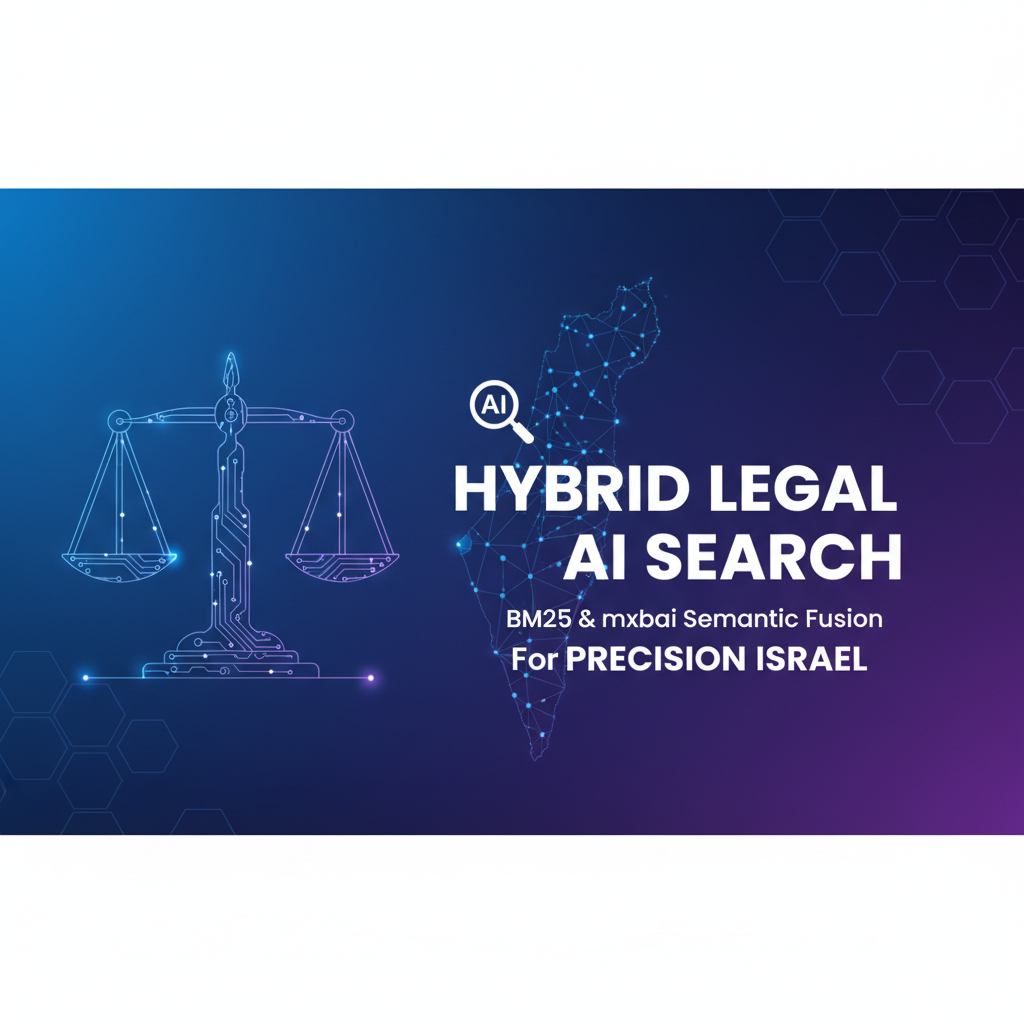
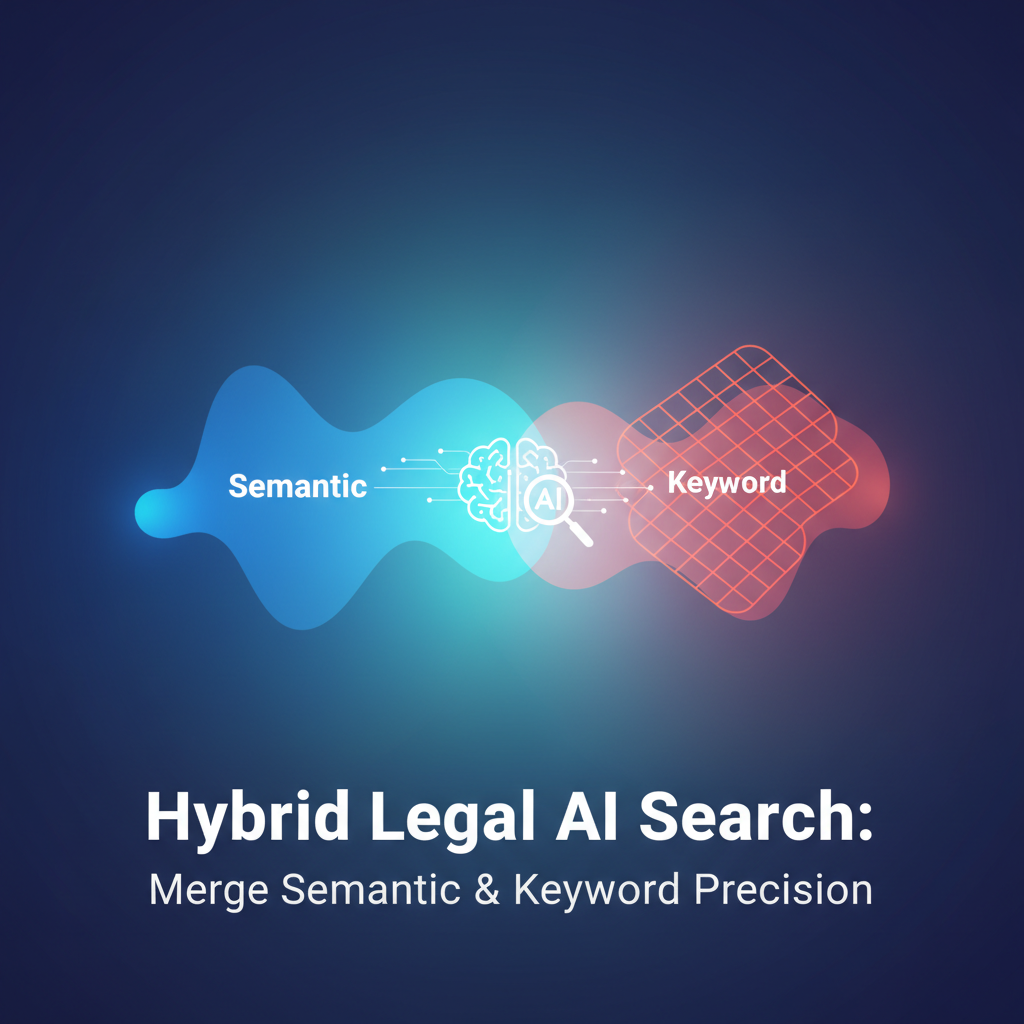
This framework uses dense embeddings to capture semantic meaning alongside sparse vectors (like BM25) for keyword accuracy. Effective hybrid search solutions integrate both contextual understanding and exact keyword precision to ensure compliance with the חוק (law); neither pure semantic nor keyword methods suffice alone. By unifying these approaches, hybrid search accelerates retrieval while enhancing relevance.
The Strategic Role of חיפוש חכם במסמכים in Modern Legal Practice
The integration of hybrid search is not merely a technical upgrade; it is a fundamental shift in how חיפוש חכם במסמכים empowers the legal industry. By leveraging both semantic vectors and lexical accuracy, firms can transform their internal knowledge bases into actionable intelligence. This transition allows for high-velocity בינה מלאכותית applications that can handle complex litigation support and regulatory compliance with unprecedented speed. As the industry evolves, those who master these retrieval methods will define the standard for operational efficiency and professional excellence under the חוק.
Technical Architecture for חיפוש חכם במסמכים and Hybrid Search
Implementing hybrid search requires a sophisticated dual-stream architecture. The first stream utilizes dense vector embeddings to capture סמנטיקה (semantics), allowing the system to understand the underlying intent of a query even if the exact words are missing. The second stream maintains traditional sparse vectors, like BM25, to ensure that specific terms found in the חוק (law) or citations are matched with 100% accuracy. By fusing these results using techniques like Reciprocal Rank Fusion (RRF), legal tech platforms can deliver a ranked list of documents that satisfy both conceptual and literal search requirements. This architecture is essential for high-stakes חיפוש חכם במסמכים systems where omission is not an option, supporting advanced בינה מלאכותית workflows.
Leveraging LLMs for חיפוש חכם במסמכים
To achieve a truly effective חיפוש חכם במסמכים, firms must look beyond simple indexing. Modern Large Language Models (LLMs) and advanced בינה מלאכותית provide the backbone for understanding the latent intent within legal texts. By processing documents through specialized embedding models trained on legal corpora, systems can recognize synonyms and conceptual relationships that traditional search engines miss. This is particularly vital when dealing with complex statutes or nuanced case law where the same legal principle might be described using diverse terminology. Implementing these models within a hybrid search architecture allows for a balance where the system understands the 'spirit' of the query while still respecting the 'letter' of the חוק.
When to Prioritize Semantic Search over Keyword Search
In the legal sector, the use case typically dictates the search priority. Semantic search is superior for conceptual discovery, such as identifying precedents involving 'good faith' where the exact phrase might not appear in every relevant ruling. It excels at uncovering thematic links across large litigation datasets. Conversely, keyword search remains the gold standard for conflict checks and specific citation retrieval where 100% literal accuracy is required.
By evaluating hybrid search through the lens of specific legal tasks, developers can build more intuitive interfaces that respect both legal סמנטיקה (semantics) and precise terminology. For instance, an initial broad research phase benefits from semantic discovery, while the final verification phase requires the surgical precision of keyword filtering. Integrating these into a single hybrid pipeline allows the system to rank results based on both conceptual relevance and lexical exactness.
Why the Choice Between Semantic and Keyword Search Matters for Precision
The shift toward advanced hybrid search is driven by the need for absolute precision in legal environments. In legal environments, missing a single specific term can change the outcome of a case. By maintaining a strong focus on מילות מפתח (keywords) while layering in vector-based semantic search, legal tech platforms ensure that no critical document is overlooked due to linguistic variations. This dual-engine approach is the backbone of high-stakes automation in the legal sector, allowing firms to process thousands of documents without sacrificing the granular detail required by law professionals.
The Evolution of Retrieval-Augmented Generation (RAG) in Legal AI Search
To achieve state-of-the-art results, Legal AI Search often employs Retrieval-Augmented Generation (RAG). RAG allows AI models to fetch relevant legal precedents or statutes before generating a response, ensuring the output is grounded in verifiable law rather than hallucinations. By integrating hybrid search within a RAG pipeline, legal firms can ensure that the retrieval step captures both the semantic spirit of the query and the exact letter of the law. This combination is particularly potent for tasks like contract analysis or regulatory compliance monitoring where missing a single clause could have significant legal ramifications. Implementing RAG-based Legal AI Search reduces the time spent on manual discovery while increasing the reliability of AI-assisted legal drafting.
Key Benefits for Legal Developers & Researchers
Developers can index datasets like Hugging Face LegalQAEval in minutes using Qdrant—deployable via cloud services or free OpenAI embeddings. Israeli startups specializing in חיפוש חכם במסמכים and Legal AI Search can leverage these hybrid models to enhance automation and complex policy analysis, streamlining both compliance and data retrieval. Researchers gain refined datasets with reduced noise, crucial for AI model training and cross-jurisdictional studies.
Optimizing UX for Smart Document Discovery
Implementing חיפוש חכם במסמכים is as much about the user interface as it is about the underlying בינה מלאכותית. For legal professionals, search transparency is paramount. A successful implementation should provide 'explainable' results, highlighting why a specific document was retrieved—whether it was a direct match for specific מילות מפתח or a semantic connection to the legal concept. Providing filters that allow users to toggle the weight between semantic 'concept' matching and lexical 'keyword' matching gives lawyers the control they need during different phases of research, from broad discovery to narrow verification of citations in the חוק.
Seamless Integration with Modern Legal Tech Stacks
Hybrid search integrates smoothly with platforms like Qdrant, enabling scalable ingestion of growing legal repositories. Israeli automation providers like does.center utilize this flexibility for document workflows in banking and public sector applications. Cloud-based or open-source deployment options ensure competitive advantages for startups and institutions alike.
Scaling Automation within the טכנולוגיה משפטית Ecosystem
As automation becomes a pillar of productivity, integrating robust hybrid search capabilities into the broader טכנולוגיה משפטית (legal tech) stack is paramount for maintaining a competitive edge. Utilizing tools like Qdrant or Elasticsearch within an automation workflow allows for real-time indexing of dynamic legal changes. For Israeli developers, this means the ability to create localized solutions that understand both the unique Hebrew legal syntax and the precise מילות מפתח necessary for regulatory reporting and cross-border litigation support.
The Strategic Advantage for Israeli Legal Automation
For developers in the Israeli market, hybrid search offers a unique solution to the complexities of Hebrew legal syntax. The language often relies on complex morphology where a single root can take many forms. A pure keyword search might fail to capture all variations, while a semantic search might be too vague. Hybrid search allows systems to leverage localized embedding models that understand Hebrew סמנטיקה while still providing the surgical precision needed to identify specific articles within the Israeli חוק. This approach significantly reduces manual review time in מחקר משפטי, empowering startups to build tools that rival international benchmarks in accuracy and speed.
Why Hybrid Search Outperforms Traditional Keyword Retrieval
Conventional keyword searches flood results with irrelevant entries, while semantic-only approaches miss critical terms. Hybrid methods excel with terms like "contract" by capturing both context (e.g., clauses) and precise terminology. This dual-layer accuracy improves transparency and decision-making across legal workflows.
Real-World Applications & Community Resources
From expediting discovery phases to supporting academic research, hybrid search’s impact spans the legal sector. Access implementation guides via JSON templates, Discord communities, or open-source projects like n8n-Qdrant. These resources democratize advanced AI tools, empowering smaller firms to compete with larger entities.
Conclusion: Navigating Semantic Search vs Keyword Search
Hybrid search represents a transformative leap in the world of Legal AI Search, combining speed, accuracy, and scalability. By adopting this approach, professionals unlock efficient document analysis, accelerated research cycles, and fairer legal processes. Explore integrations today to redefine your legal data strategies.
Understanding the Core Differences: Semantic vs Keyword
To optimize document retrieval, one must understand the fundamental divide of semantic search vs keyword search. Keyword search, often referred to as lexical search, looks for literal matches of words or phrases. In legal contexts, this is vital for finding specific statute numbers or defined terms. However, it fails when a user searches for 'employment termination' but the document uses 'dismissal of staff'.
Semantic search solves this by using vector embeddings to understand intent and context. It maps words into a multi-dimensional space where 'termination' and 'dismissal' are mathematically close. While powerful, semantic search can sometimes be 'too fuzzy' for legal work, potentially overlooking a specific term of art because it prioritized broader contextual similarity. This is why the industry is shifting toward hybrid models that leverage the strengths of both methodologies.