Overcoming Survivorship Bias in Email Security Using Large Language Models
04 March 2026
4 דקות קריאה
6 צפיות
Quick AI Summary
This article explores the impact of large language models on email security in tackling survivorship bias. It emphasizes the importance of deep analysis and the use of advanced technologies to strengthen defenses.
How Large Language Models Address Survivorship Bias and Enhance Email Security
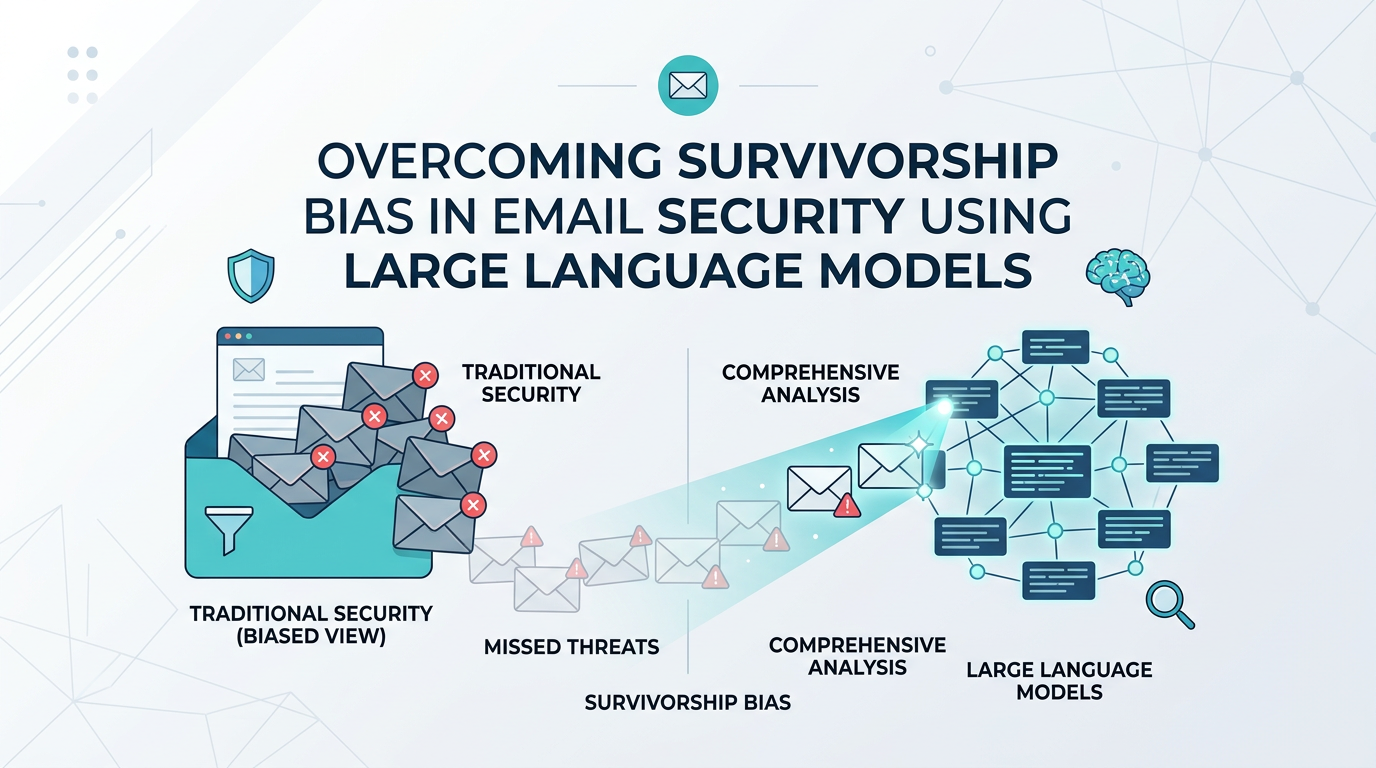
The landscape of email security is constantly evolving, with defenders and attackers locked in relentless competition. As cybercriminal tactics sharpen, security experts must stay ahead by continually assessing and strengthening defenses against emerging threats. A useful analogy comes from World War II: engineers studied returning aircraft and reinforced the most frequently damaged areas. However, this approach—known as survivorship bias—can mislead efforts. The true vulnerabilities might lie in the untouched parts of planes that never returned. Similarly, conventional security measures often target the most visible threats but overlook subtle, unseen flaws that sophisticated adversaries can exploit.
## Survivorship Bias and Email Security Vulnerabilities
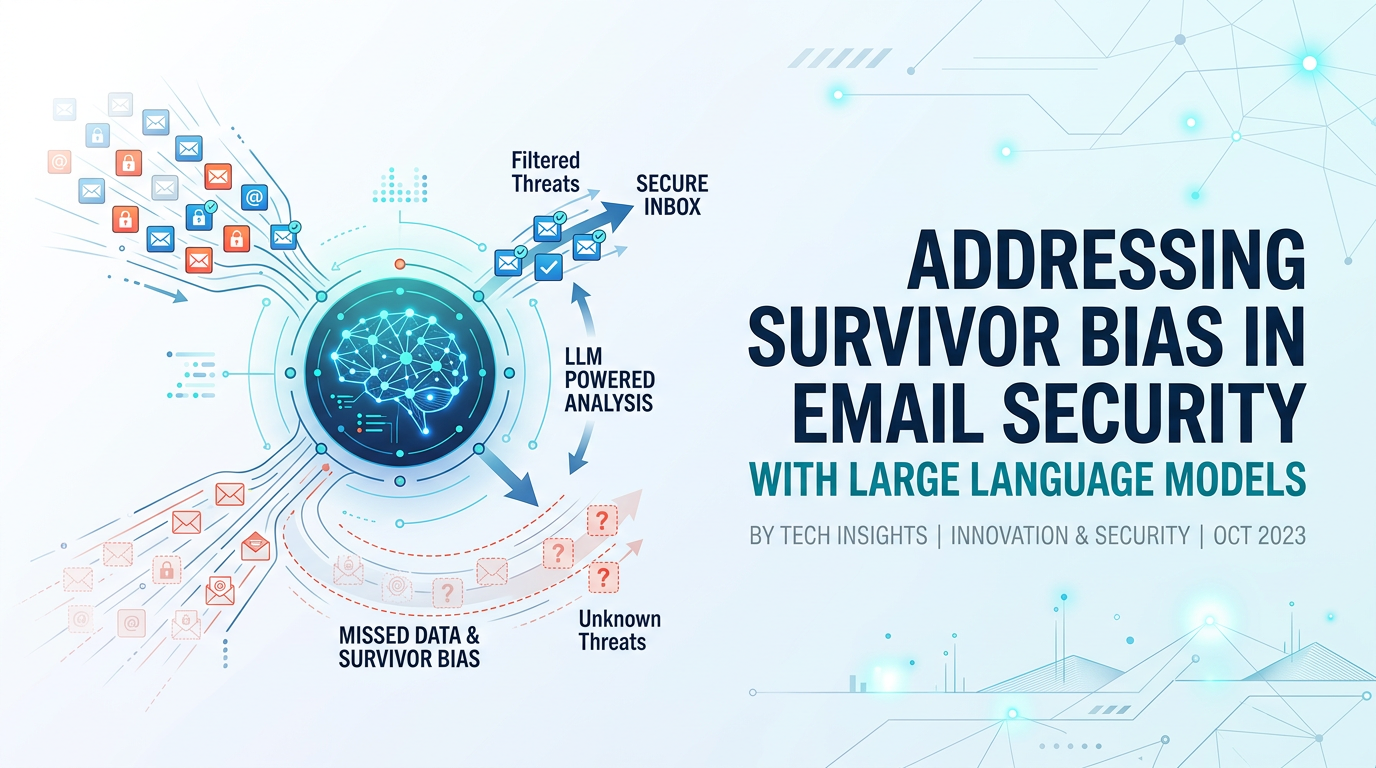
Survivorship bias occurs when conclusions are drawn solely from surviving examples, ignoring hidden failures. During WWII, engineers reinforced visible damage on returning planes, unaware critical weak points were in non-damaged areas that caused plane losses. In cybersecurity, this translates to an overfocus on common email threats like phishing scams, spam, and malware attachments, while neglecting deep-rooted vulnerabilities such as hidden code flaws, advanced persistent threats, or subtle configuration issues. These blind spots can become entry points for attackers using advanced social engineering or machine learning manipulation tactics. For example, a company might heavily defend against generic phishing but miss complex attacks using nuanced language to bypass filters.
In Israel, with its strong high-tech ecosystem and critical financial and healthcare infrastructure, recognizing and addressing such hidden email vulnerabilities is vital. Automation providers like does.center play a role in enhancing cybersecurity posture by integrating advanced detection tools that address these blind spots within local organizations.
## Enhancing Email Security with Advanced Analytics
Traditional rule-based and signature-dependent email security tools often fall short against sophisticated threats. Advanced analytics and emerging technologies like Large Language Models (LLMs) add a robust layer to security strategies. LLMs understand language context, enabling detection of subtle cues, linguistic anomalies, and intent behind emails. For instance, while traditional systems verify sender addresses and check malware signatures, LLMs analyze an email's phrasing against known communication patterns. Discrepancies such as unusual urgency or altered formatting are flagged for deeper review. This nuanced, context-based analysis helps uncover hidden malicious content titled “phishing attacks in disguise.”
LLMs have practical relevance for Israeli banks, hospitals, and logistics companies, where protecting sensitive information and ensuring secure communication is a top priority. Tools developed by companies such as does.center often leverage machine learning insights to automate security workflows, helping organizations respond rapidly to emerging threats.
## Benefits of Large Language Models in Email Security
LLMs offer several advantages beyond spam detection:
1. **Proactive Threat Detection:** LLMs anticipate vulnerabilities by recognizing behavioral and linguistic shifts, allowing early detection of evolving phishing language patterns.
2. **Contextual Analysis:** By leveraging historical communication data, LLMs differentiate normal emails from anomalies, reducing false positives and improving accuracy.
3. **Rapid Adaptation:** LLMs update their threat models in real time to counter constantly changing cyberattack techniques.
4. **Enhanced Email Categorization:** Besides threat detection, LLMs improve email sorting, ensuring critical messages are prioritized and reducing the risk of missing key information.
## Real-World Applications Across Industries
- **Financial Institutions:** Banks can identify subtle anomalies in emails that indicate fraud or breaches, minimizing financial loss and protecting client data.
- **Healthcare Providers:** Advanced language models help filter emails to protect sensitive patient information from phishing and targeted attacks.
- **Corporate Enterprises:** Companies secure strategic internal communications by flagging emails with unusual tone or phrasing, safeguarding proprietary data.
Israeli research institutions actively explore the application of LLMs and AI-driven insights to bolster email security across sectors. This ongoing work supports the broader adoption of proactive threat detection mechanisms.
## Challenges in Implementing LLMs for Email Security
While promising, LLM integration faces challenges. The effectiveness depends on the quality and diversity of training data; biased or incomplete datasets may cause missed threats or false alarms. Continuous fine-tuning and human oversight remain crucial. Privacy is also a key concern—analyzing email content requires secure data handling and anonymization to comply with regulations, balancing threat detection with user confidentiality.
## Future Outlook: Proactive and Adaptive Email Security
Utilizing LLMs transforms email security from reactive to proactive. By addressing survivorship bias and focusing on hidden vulnerabilities, organizations can evolve defenses dynamically based on emerging patterns and contextual insights. This synergy of machine learning precision and human expertise strengthens resilience against advanced cyber threats.
Ultimately, email security strategies must be adaptive and resourceful, capable of mitigating blind spots and responding swiftly to evolving risks. Leveraging LLMs to augment traditional defenses equips organizations to protect valuable information and build a robust infrastructure for future challenges. Automation providers like does.center represent an important part of this adaptive ecosystem, helping Israeli businesses and beyond to implement intelligent, scalable security solutions.
What is survivorship bias in the context of email security?
Survivorship bias occurs when conclusions are drawn solely from surviving examples, ignoring hidden failures. In email security, this can lead to an overfocus on visible threats while neglecting complex vulnerabilities that could be exploited by attackers.
How do Large Language Models (LLMs) improve email security?
LLMs enhance email security by understanding language context and detecting subtle cues, anomalies, and intent behind emails. They can analyze phrasing and flag discrepancies for further review, which helps to identify hidden malicious content.
Why is addressing hidden vulnerabilities important in email security?
Addressing hidden vulnerabilities is crucial because attackers may exploit subtle configuration issues or advanced persistent threats that aren't visible when only focusing on common email threats like phishing and spam.
What role do automation providers like does.center play in email security?
Automation providers like does.center help enhance cybersecurity by integrating advanced detection tools that target hidden vulnerabilities within organizations, especially in regions with critical infrastructure.
What are the implications of ignoring survivorship bias in cybersecurity?
Ignoring survivorship bias can lead to a false sense of security, as organizations may think they are adequately protected by focusing only on visible threats and overlooking more sophisticated and less obvious attack vectors.