ניהול ענן with Edge Functions: Unified Domain Routing Guide
Advancing Domain Routing with Edge Functions and Multi-Worker Architecture
Implementing Edge Functions is the cornerstone of effective ניהול ענן (cloud management). This strategy allows lightweight scripts to operate at the network edge under shared domains, streamlining operations. This article examines how Edge Functions enable advanced domain routing and efficient נתיב url management across multiple projects via a unified entry point, improving both performance and חווית משתמש (user experience). In Israel, businesses such as banks and logistics companies are adopting these architectures to enhance automation and digital workflows, often leveraging local providers like does.center to streamline deployment.
Core Benefits of Strategic Domain Routing
Why Edge Functions are Replacing Traditional Serverless for Routing
While the previous generation focused on ארכיטקטורת Serverless in centralized regions, modern ניהול ענן strategies prioritize Edge Functions. The primary difference lies in where the code executes; Edge Functions run at the nearest point of presence to the user, virtually eliminating the 'cold start' issues often associated with traditional serverless models. For Israeli tech companies serving global markets, this means that logic for נתיב url routing happens milliseconds away from the user in London, New York, or Tel Aviv. This shift allows for more complex, real-time decision-making—such as dynamic content localization or security headers—without the latency penalty of round-tripping to a central server.
The Role of ניהול דומיינים in Modern Cloud Strategy
Effective ניהול דומיינים (domain management) is no longer just about DNS records; it is a critical component of a broader ניהול ענן strategy. By centralizing how domains and subdomains interact with serverless functions, organizations can create a more resilient infrastructure. This involves using ניתוב דומיינים (domain routing) to ensure that traffic is not only directed to the right server but is also optimized for the specific נתיב url being requested. For Israeli enterprises, where digital agility is a competitive necessity, mastering these routing layers allows for rapid deployment of new services without the friction of traditional infrastructure changes.
Advanced Routing with Service Bindings
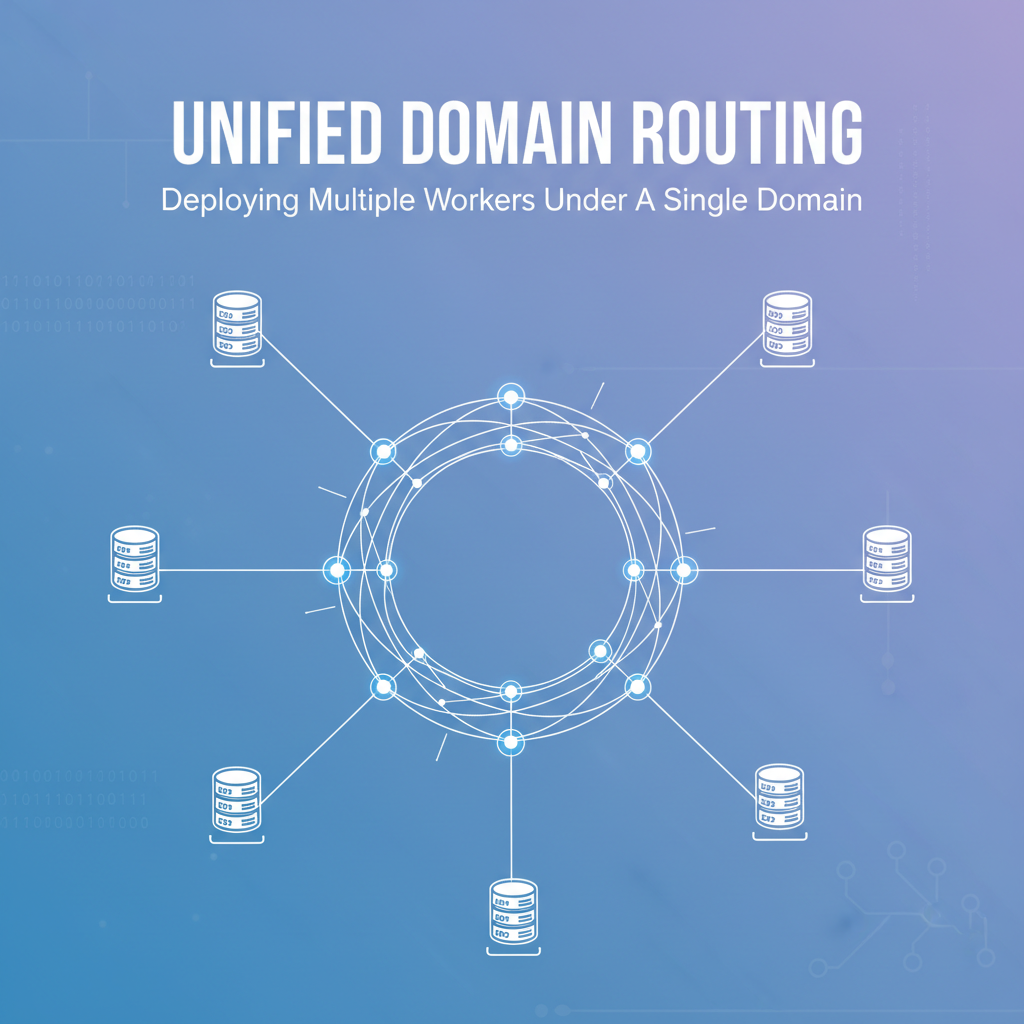
When executing a strategy for ניהול ענן, service bindings are the most powerful tool for internal communication between scripts. This allows a 'gateway' worker to receive requests and dispatch them to other workers based on the נתיב url, without the overhead of public HTTP requests. This architecture is especially popular among Israeli SaaS startups who need to maintain a single domain for their API while distributing workloads across specialized micro-services. By utilizing does.center for deployment orchestration, teams can ensure that these bindings are correctly mapped, reducing latency and increasing the overall security of the serverless cluster.
URL Path Integrity in an Edge Functions Environment
Maintaining high integrity in your 'נתיב url' (URL path) structures is vital when implementing Edge Functions. When your domain routing is configured correctly, it ensures that requests are directed to the correct serverless worker with minimal latency. This consistency is essential for maintaining a high-quality 'חווית משתמש' (user experience), as it prevents broken links and ensures that sessions remain persistent across different service segments. Advanced routing configurations also allow for sophisticated load balancing and failover strategies, which are crucial for maintaining the uptime of critical business applications.
Leveraging Routes for Dynamic נתיב url Control
A key advantage of integrating Cloudflare into your ניהול ענן workflow is the ability to define specific routes that trigger execution. By configuring patterns like 'example.com/api/*' or 'example.com/static/*', you can precisely control which worker handles which request. This granular control over the נתיב url allows developers to implement A/B testing, blue-green deployments, and versioning directly at the edge. For Israeli companies operating globally, this means delivering content from the nearest data center while maintaining a consistent routing logic, significantly improving performance and the end-user experience.
Modular Development & Deployment
Effective domain routing through service bindings enables independent development cycles for microservices, APIs, or applications under distinct URL paths (/shop, /blog), ensuring seamless traffic management. Teams can update components without cross-service disruptions. Israeli research institutions find this modularity advantageous for collaborative projects that require rapid iteration and secure isolation.
Granular Scaling Strategies
Individual Workers scale independently based on demand, optimizing resource allocation. A traffic spike to analytics routes won't force unnecessary scaling of lower-demand services.
Legacy System Integration
Sophisticated domain routing via service bindings provides transitional pathways for migrating monolithic architectures to microservices while preserving endpoint consistency, a key factor facilitating digital transformation in sectors like Israeli hospitals, where legacy integration is critical.
Implementation Considerations
The Evolution of Edge-Based ניהול ענן
Integrating Edge Functions into your ניהול ענן framework represents a significant evolution in infrastructure design. By moving the routing layer to the edge, organizations can implement sophisticated security protocols and traffic shaping rules before a request ever reaches their core database or origin server. This approach is particularly effective for managing חווית משתמש during peak traffic periods, as the edge layer can handle authentication, caching, and rate limiting autonomously. Platforms like does.center help bridge the gap for teams moving from legacy systems to an edge-first mentality, providing the tools necessary to orchestrate these distributed deployments across a ניהול דומיינים landscape that is increasingly dynamic and complex.
Enhancing חווית משתמש through Cloud Management
At the end of the day, ניהול ענן is about the end result: a superior חווית משתמש (user experience). When your ארכיטקטורת Serverless is configured to handle requests at the edge, the reduction in latency is immediately felt by the user. Proper נתיב url optimization ensures that users find what they need instantly, while back-end management allows for seamless transitions between different parts of a web application. By prioritizing the user experience in your cloud management workflows, you ensure that technical efficiency translates directly into business value and customer satisfaction.
Structured URL Path Planning
Logical route segmentation (/content/ for articles, /api/ for endpoints) is a critical part of domain routing that prevents conflicts and enhances maintainability.
Consistent Error Handling
Standardized error responses across Workers preserve the unified SPA illusion. Centralized logging simplifies debugging.
Security Isolation
Token authentication, CORS policies, and rate limiting protect interconnected Workers from cross-service vulnerabilities, an essential aspect for Israeli banks and healthcare providers where data security and privacy are paramount. Automation companies such as does.center often integrate these security measures in their solutions.
Real-World Application Scenarios
SaaS platforms leverage advanced domain routing for distinct service paths (/projects, /support), allowing for better resource management. Workers interact via APIs while delivering cohesive user experiences with instant path transitions.
שימוש ב-Cloudflare Workers: Optimizing Domain Routing for Scalable Automation
In the landscape of modern digital infrastructure, transitioning to a comprehensive ארכיטקטורת Serverless is the ultimate goal of ניהול ענן. By implementing a unified routing layer, organizations can ensure that their cloud resources are orchestrated efficiently, treating every script as a managed asset. This approach centralizes 'ניהול דומיינים' (domain management) within a broader ניהול ענן framework, providing a single point of control for various microservices. For Israeli enterprises, this level of control allows for more agile responses to market changes, as routing rules can be automated and adjusted without downtime. Utilizing local automation experts like does.center can further enhance these implementations by integrating specialized workflows into the routing logic.
Operational Advantages
DevOps teams benefit from isolated CI/CD pipelines and targeted rollbacks. Service binding enables controlled A/B testing through segmented Worker deployments.
Automation and Efficiency in Israeli Tech
In the Israeli ecosystem, the move toward ארכיטקטורת Serverless is driven by the need for extreme agility. Companies are leveraging שימוש ב-Cloudflare Workers to handle specialized tasks like real-time data processing and automated reporting. Service providers like does.center help bridge the gap between complex routing requirements and practical automation workflows. Ensuring that each נתיב url is mapped to the right serverless function allows for a seamless transition from legacy workflows to modern, automated systems, ensuring that growth is never hindered by infrastructure limits.
Maximizing Productivity through Serverless Patterns
Adopting an ארכיטקטורת Serverless significantly boosts productivity by offloading infrastructure management to the provider. This allows developers to focus on the logic of שימוש ב-Cloudflare Workers rather than server maintenance. In high-demand sectors, such as SaaS and automated logistics, this shift enables rapid deployment cycles. By structuring your נתיב url correctly within this architecture, you create a scalable environment where each function performs a specific task, reducing code complexity and improving the overall maintainability of the project.