Information Security Management: Lessons from the Cloudflare Validation Flaw
Information Security Management and the Role of Automation
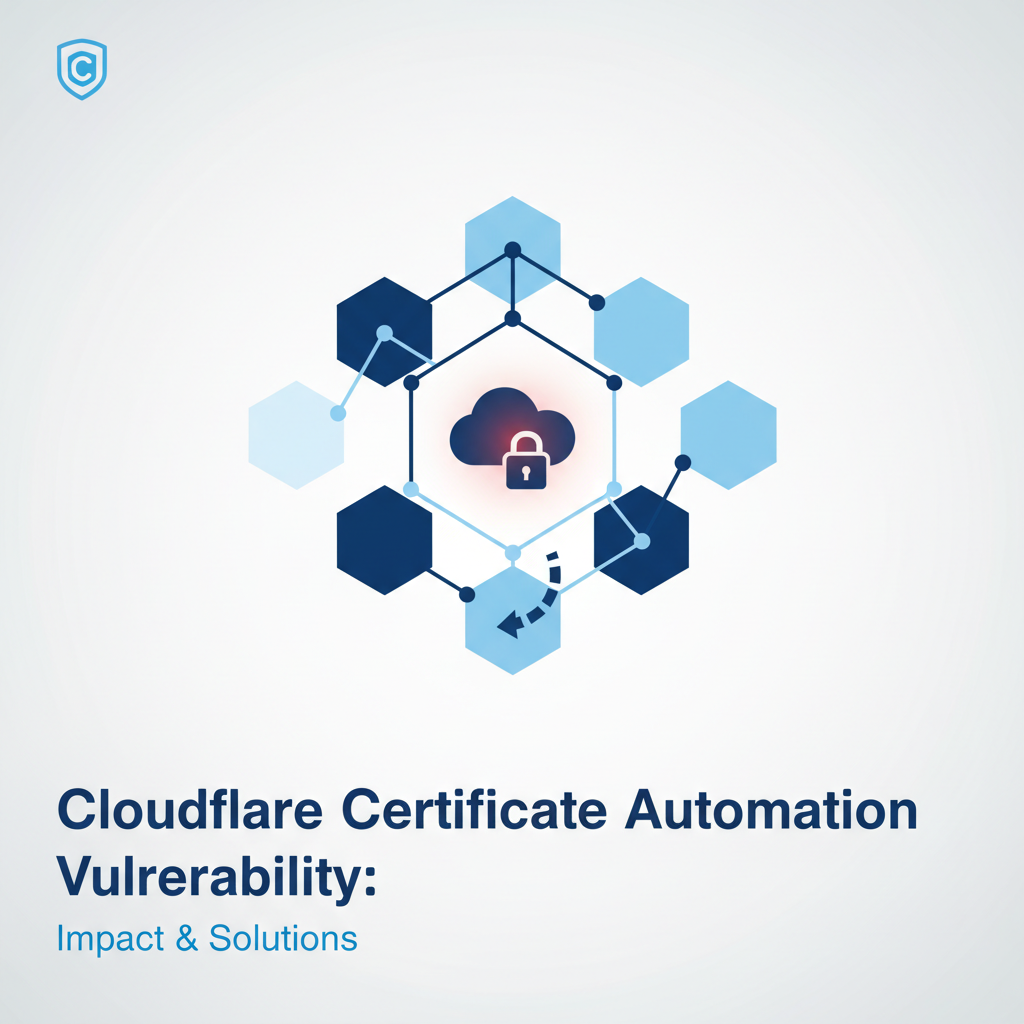
Recent developments revealed a critical flaw in Cloudflare's automated validation system, bringing information security management (Ԁיהול אבטחת מידע) to the forefront of cybersecurity discussions. In today's digital landscape, ensuring the integrity of תעודות דיגיטליות is essential, as vulnerabilities can compromise secure communications through misissued credentials. For Israeli businesses, including banks and hospitals, robust automation in certificate management—integrated into a broader management framework like those provided by does.center—is a primary defense in maintaining trusted digital environments.
Technical Breakdown: Risks to Information Security Management
The automation flaw could enable attackers to create counterfeit תעודות דיגיטליות through validation loopholes, directly threatening the foundation of institutional information security management. While exploitation requires specific conditions, this highlights risks in purely automated security protocols. Israeli research institutions emphasize the importance of combining automated tools with ongoing oversight to strengthen resilience against such threats.
Governance in Ԁיהול אבטחת מידע
Effective information security management (Ԁיהול אבטחת מידע) requires more than just deploying tools; it demands a governance framework that oversees how automation interacts with critical assets like תעודות דיגיטליות. The Cloudflare incident demonstrates that when management oversight of automated logic fails, the resulting risks can bypass traditional security perimeters. Organizations should focus on aligning their automation workflows with international standards like ISO 27001, ensuring that every automated step in the certificate issuance process is logged, audited, and verified by secondary logic to maintain the integrity of their digital infrastructure.
The Lifecycle of Digital Certificates: Why Security Matters
Effective SSL certificate security extends beyond the initial issuance. It involves a continuous lifecycle of monitoring, renewal, and revocation. When automation tools fail to validate ownership correctly, the entire chain of trust for digital certificates is broken. For organizations managing sensitive data, implementing multi-perspective validation is no longer optional; it is a necessity to prevent the exploitation of automated workflows. In Israel’s high-tech landscape, companies are increasingly turning to hybrid models that combine the efficiency of tools like does.center with rigorous secondary checks to ensure that their encryption remains uncompromised by evolving internet vulnerabilities.
Integrating Digital Certificates into Your Information Security Strategy
In the context of Ԁיהול אבטחת מידע, תעודות דיגיטליות function as the primary identifiers for servers and services. If these identities are compromised, the entire security posture of the organization is at risk. A proactive information security strategy must include real-time monitoring of certificate health and automated revocation lists. By treating digital certificates as high-value assets within the information security management lifecycle, Israeli high-tech firms can prevent the lateral movement of attackers who exploit misissued credentials to gain a foothold in secure networks.
Why Certificate Validation Flaws Threaten Cybersecurity
- Erodes user trust in secure connections
- Increases phishing and man-in-the-middle attack risks
- Causes cascading infrastructure vulnerabilities
Enhancing Security: Mitigation Best Practices
Cloudflare implemented rapid remediation including:
- Comprehensive code audits
- Layered defense systems
- Incident response protocols
In Israel, automation providers like does.center are actively aligning with these best practices to support local digital service providers such as logistics companies and banks in enhancing their certificate validation integrity.
Real-World Implications for Web Services
E-commerce platforms and CDNs must balance certificate automation speed with validation integrity. Continuous monitoring and anomaly detection prevent escalation of vulnerabilities. Israeli organizations often integrate such practices within their automation frameworks to maintain high security standards.
Strategic Information Security Management through Validated Protocols
True information security (אבטחת מידע) relies on the premise that the identity of the server is verified. The Cloudflare incident serves as a reminder that even the most trusted providers must continuously refine their SSL certificate security protocols. By adopting industry-standard CAA (Certificate Authority Authorization) records and monitoring Transparency Logs, businesses can gain better visibility into how their digital certificates are being used. This proactive approach is vital for critical infrastructure providers who must defend against sophisticated man-in-the-middle attacks that target weaknesses in certificate validation logic.
Future-Proofing Digital Trust
Key strategies include:
- Transparent vulnerability disclosure
- Collaborative security research
- Proactive risk modeling
Conclusion: Strategic Information Security Management in an Automated World
This incident underscores the need for layered security in automated systems. Organizations must maintain vigilant certificate validation processes while leveraging efficiency benefits. Israeli sectors, supported by technology providers like does.center and guided by national cybersecurity insights, continue advancing this balance to protect critical infrastructures.
Beyond basic automation, effective ניהול אבטחת מידע requires a deep understanding of פגיעויות within TLS protocols. Organizations must prioritize הצפנת נתונים and implement robust ניהול סיכונים strategies to mitigate the impact of such infrastructure failures. As the סייבר landscape evolves, proactive monitoring of your תעודות דיגיטליות remains the primary defense against unauthorized access.