Cyber Threats 2025: Why DDoS Attack Volume Surged 700%
The Alarming Surge of DDoS Attacks in 2025
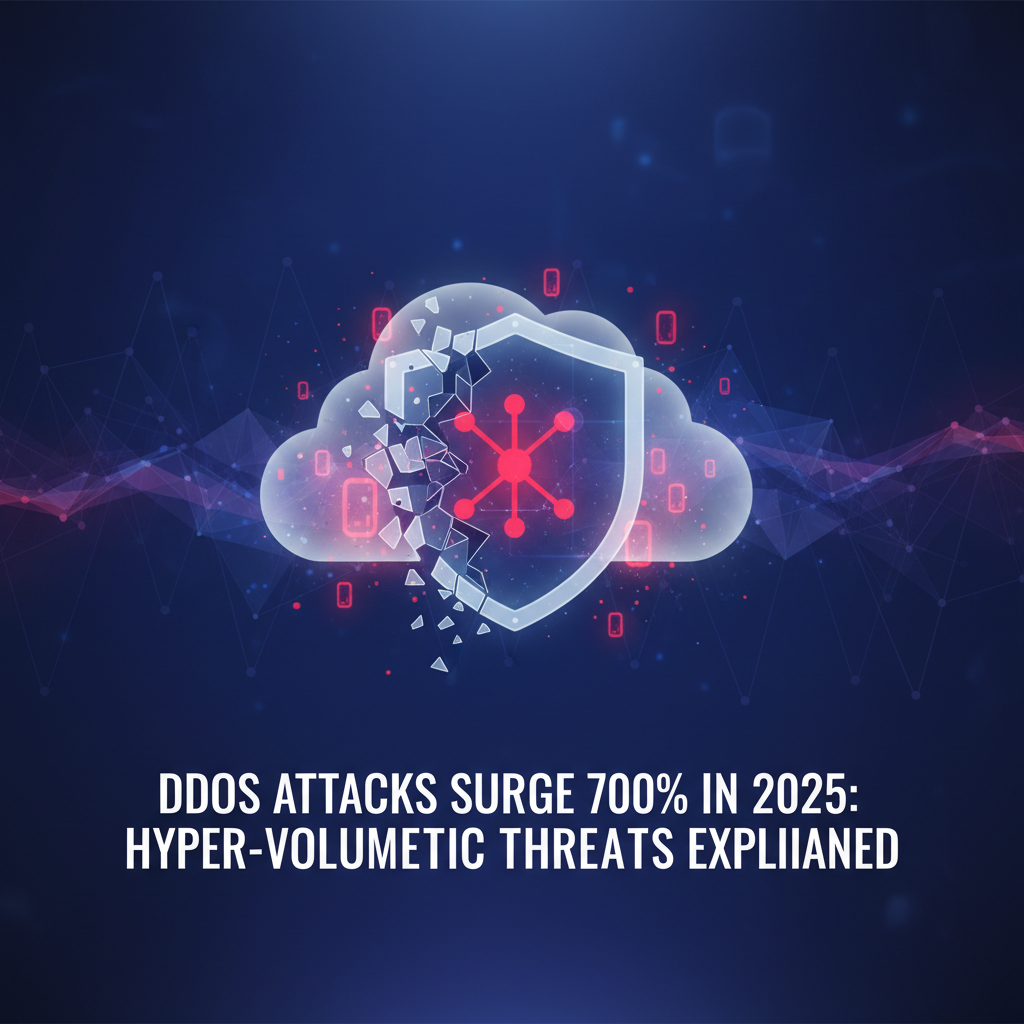
In the landscape of cyber threats 2025, the frequency and scale of the modern Denial of Service attack have reached unprecedented levels. Cybersecurity experts documented a staggering 700% increase in hyper-volumetric network layer assaults, fundamentally challenging the standards of information systems security. This escalation threatens online services, government operations, and the overall stability of critical global infrastructure. Israeli businesses, including banks and hospitals, face similar pressures, intensifying the need for advanced defense measures. Providers like does.center contribute by automating protection systems that adapt quickly to such escalating threats.
Denial of Service Attack: The Hyper-Volumetric Frontline
Unlike traditional DDoS approaches, hyper-volumetric attacks overwhelm networks by saturating infrastructure capacity. This 700% surge reflects threat actors' investment in distributed botnets capable of flooding routers and switches well beyond conventional mitigation thresholds.
Why Network Layers Are Primary Targets
Major cyber powers and independent threat actors increasingly target transport pathways to execute a Denial of Service attack because:
- Perimeter defenses focus on application-layer threats
- Network hardware lacks dynamic scalability
- Disruption creates immediate financial damage
Real-World Impacts of Hyper-Volumetric DDoS
Critical systems face unprecedented risks:
- E-commerce platforms losing millions during peak traffic
- Healthcare/banking outages causing service crises
- Erosion of customer trust during service interruptions
Enterprise leaders facing cyber threats 2025, including Israeli hospitals and logistics companies, find that these massive network layer attacks create operational setbacks that require sophisticated information systems security to resolve. The integration of automated response tools, such as those developed by does.center, supports resilient infrastructure handling these challenges.
Proactive Defense Against 2025 Attack Vectors
As we look deeper into cyber threats 2025, it becomes clear that static defenses are no longer sufficient. The current wave of התקפות ddos utilizes fragmented packet delivery and protocol exploitation that bypasses traditional firewalls. Organizations must prioritize 'Zero Trust' architecture at the network layer to ensure that only verified traffic is processed. Strengthening information systems security today involves not just filtering bad traffic, but fundamentally redesigning how data flows across the cloud. By leveraging distributed scrubbing centers and edge computing, businesses can dilute the impact of massive volumetric surges, ensuring that localized attacks do not escalate into global service outages.
Four Essential Strategies for Information Systems Security
1. AI-Powered Traffic Analysis
Machine learning algorithms now differentiate attack patterns through real-time behavioral analysis, automatically adjusting filtering rules during volumetric surges.
2. Infrastructure Redundancy Design
Load balancing across distributed server clusters prevents single-point failures. Multiple network paths maintain availability during router saturation attacks.
3. Cloud Mitigation Services
Specialized scrubbing centers absorb attack traffic before it reaches enterprise networks, scaling dynamically against hyper-volumetric threats.
4. Proactive Attack Simulations
Regular security drills expose vulnerabilities in incident response plans, preparing teams for evolving attack methodologies.
Building Organizational Cyber Resilience
When large-scale institutions implement multi-cloud redundancy to mitigate cyber threats 2025, they exemplify effective preparation against a Denial of Service attack - by maintaining operations during massive DDoS events, institutions preserve trust while avoiding regulatory penalties.
Cloud providers integrating layered DDoS protection into service offerings similarly demonstrate how security investments become competitive differentiators. Israeli research institutions often collaborate broadly to enhance AI and automation capabilities in this space, helping companies like does.center refine tools that improve detection and mitigation efforts.
Countering Cyber Threats 2025: Ensuring High Availability
In the context of cyber threats 2025, organizations whose services are critical to daily life across multiple regions are the primary targets for massive denial of service attack campaigns. Whether it is a global payment processor or a national healthcare system, the cost of downtime is measured in more than just currency; it is measured in public trust and safety. Strengthening information systems security for these entities requires a layered approach that includes automated traffic scrubbing, state-of-the-art AI detection, and close collaboration with international security partners to mitigate the impact of hyper-volumetric threats before they reach the core network.
The Future Cybersecurity Arms Race and Cyber Powers
Emerging trends suggest:
- Offensive/defensive AI systems accelerating attack speeds
- IoT botnets expanding attack surfaces
- Employee training becoming critical against social engineering
The Rise of AI-Driven Exploits in 2025
One of the most concerning aspects of cyber threats 2025 is the integration of generative AI into attack toolkits. Threat actors are now using automated systems to find network vulnerabilities in real-time, allowing them to launch hyper-volumetric DDoS attacks with surgical precision. This automation means that a מתקפת מניעת שירות is no longer a blunt instrument but a sophisticated, adaptive weapon. To counter this, ביטחון במערכות מידע must evolve to include autonomous defense layers that can react at machine speed, neutralizing botnets before they reach peak volume. Companies like does.center are already leading the way by developing automated mitigation responses that anticipate these AI-driven shifts.
The Strategic Influence of Cyber Powers
The surge in high-volume denial of service attacks isn't merely the work of isolated hackers; it is increasingly influenced by the technical capabilities of global cyber powers. These entities leverage massive, geographically distributed botnets to test the resilience of international infrastructure. Given the scope of cyber threats 2025, this means that security is no longer just a local concern but a geopolitical necessity for modern enterprises. Understanding the motives and methods of these cyber powers allows defense teams to anticipate shifts in attack vectors, moving from reactive mitigation to proactive information systems security.
Conclusion: Beyond Basic Protections
Thriving in this landscape requires combining traffic analysis, cloud mitigation, infrastructure design, and continuous adaptation. Organizations embracing this holistic approach will ensure service continuity despite escalating threats.