איך למדוד ביצועי AI: הנדסת פרומפטים, אסטרטגיות אופטימיזציה ומדדי הצלחה
איך למדוד ביצועי AI בצורה נכונה: מבוא למדדים ושיטות הערכה
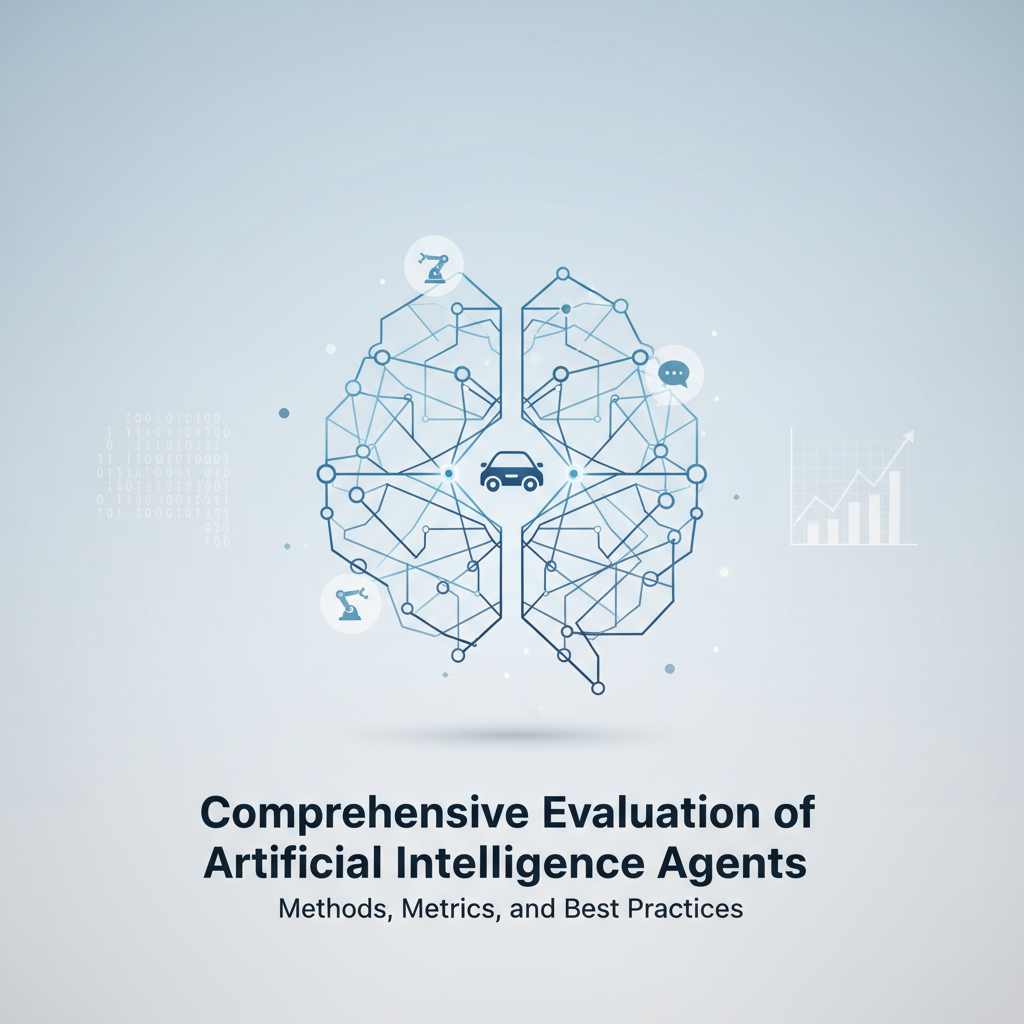
Mastering הנדסת פרומפטים alongside understanding איך למדוד ביצועי AI בצורה מדויקת הם צעדים קריטיים to ensure reliable and effective performance in real-world applications. As AI technologies become embedded across industries such as healthcare, autonomous driving, customer service, and finance, rigorous testing and continuous refinement of these agents are essential. Israeli research institutions and businesses, including hospitals and banks, increasingly emphasize thorough AI evaluation to support safe and effective automation in their sectors.
The Strategic Importance of Measuring AI Performance
Understanding how to measure AI performance is more than just a technical requirement; it is a strategic business necessity. In an era where AI agents influence critical decision-making, being able to quantify success is the difference between a high-ROI tool and a costly liability. Measuring performance allows teams to isolate variables in their prompts and model architecture, ensuring that the system evolves to meet specific organizational KPIs rather than drifting into unpredictable territory.
By focusing on actionable data, stakeholders can bridge the gap between abstract technical metrics and tangible business outcomes. Whether you are tracking latency, accuracy, or reasoning consistency, a rigorous measurement strategy provides the evidence needed to scale AI deployments with confidence. When companies understand how to measure AI performance, they move away from 'black box' uncertainty toward a transparent, data-driven lifecycle that prioritizes reliability and user trust.
Principles of Effective Prompt Engineering
Effective הנדסת פרומפטים (Prompt Engineering) is the cornerstone of high-performing AI agents. It involves crafting precise instructions that guide the model toward desired reasoning patterns. Key techniques include 'Chain-of-Thought' prompting, where the model is encouraged to decompose complex problems into smaller, logical steps. Additionally, 'Few-Shot' prompting—providing the model with a few examples of desired input-output pairs—significantly improves output consistency. For enterprise applications, iterative refinement of these prompts based on performance data is essential to reduce hallucination rates and increase factual reliability. By aligning prompt structure with business logic, organizations can achieve more predictable behavior from their Large Language Models, bridging the gap between raw machine capability and professional-grade requirements.
A Practical Framework for Measuring AI Performance
To learn how to measure AI performance (איך למדוד ביצועי AI) effectively, teams should follow a structured framework. First, establish a diverse 'Golden Dataset' that represents the variety of queries your agent will encounter. Next, apply שיטות הערכה (evaluation methods) that include both automated checks for factual accuracy and qualitative reviews for tone and helpfulness. By following a step-by-step approach—moving from unit tests of specific prompts to end-to-end system simulations—developers can gain a clear picture of model strengths and weaknesses. This systematic testing ensures that subsequent optimization efforts are based on hard evidence rather than guesswork.
Offline vs Online AI Testing
Choosing between offline and online testing environments is a fundamental consideration when deploying AI systems. Offline testing, also called simulation-based or pre-deployment evaluation, runs the AI through controlled datasets and test cases. This method enables safe, repeatable scrutiny of the model’s behavior before live deployment. For instance, a healthcare AI diagnostic tool evaluated offline with anonymized patient data verifies diagnostic accuracy and consistency. Offline testing isolates specific scenarios, uncovers corner cases, and reveals issues early to save development resources. In Israel, companies like does.center support automation providers by facilitating these offline evaluations to strengthen AI solutions before market introduction.
In contrast, online testing—also known as A/B testing or live pilot programs—assesses AI performance in real-world conditions. This type of evaluation measures how systems respond to unpredictable user behaviors and dynamic environments. For example, a fraud detection AI may perform well offline, but only online testing reveals its effectiveness amid fluctuating banking transactions. Hence, online testing complements offline methods by validating adaptability and robustness in production. Israeli logistics companies and banks often engage in online testing to ensure their AI systems operate reliably under real-time demands.
The Emergence of 'LLM-as-a-Judge' in Language Model Evaluation
A transformative trend in הנדסת פרומפטים is the use of 'LLM-as-a-Judge', which allows developers to test how different prompt structures influence model reasoning. This method utilizes powerful models like GPT-4 to evaluate the outputs of other models based on specific rubrics. While traditional מדדי ביצוע like ROUGE or BLEU provide mathematical similarity, they often fail to capture the semantic nuance and intent behind a response. By employing a language model to grade another, developers can obtain qualitative scores for attributes like helpfulness, safety, and coherence at scale. In the Israeli high-tech sector, this approach is becoming standard for rapidly iterating on conversational agents without relying solely on slow and expensive human review cycles.
Selecting the Right Metrics for Your AI Pipeline
Selecting appropriate metrics when learning איך למדוד ביצועי AI is not a one-size-fits-all task. For classification tasks, developers often rely on precision, recall, and F1 scores. However, for generative tasks, the focus shifts toward semantic similarity and logic consistency. Implementing these מדדי ביצוע within an automated pipeline allows for continuous monitoring. In the context of Israeli SaaS companies, integrating these metrics into the CI/CD pipeline ensures that any performance degradation is caught before it reaches the end user. Furthermore, utilizing various שיטות הערכה such as cross-validation and human-in-the-loop review ensures a holistic view of system health, bridging the gap between technical efficiency and user satisfaction.
הנדסת פרומפטים: אופטימיזציה ומדדי ביצוע למודלים לשוניים
A comprehensive approach to measuring AI performance requires defining and tracking key מדדי ביצוע (performance metrics). Metrics vary by application, but generally focus on accuracy, reliability, efficiency, user satisfaction, and safety. Accuracy and reliability ensure correct and consistent AI decisions. Efficiency looks at response times and resource use vital for scalable systems; for example, virtual assistants must deliver prompt and precise answers. Safety is paramount in domains like autonomous vehicles, where minor errors can have serious consequences. A balanced metric framework reflects trade-offs specific to each AI use case. Israeli AI projects often tailor these metrics to meet both global standards and local regulatory expectations.
Strategic הנדסת פרומפטים: Beyond Basic Accuracy
When optimizing AI, simply measuring general accuracy is no longer enough. Advanced הערכת מודלי שפה must include metrics such as 'Faithfulness' (how well the response aligns with the source data) and 'Relevance' (how well the response answers the specific user query). In the context of business productivity, developers should also track 'Latency' and 'Cost-per-token' to ensure that automated agents provide real-time value without exceeding budget constraints. By monitoring these specific performance indicators, Israeli companies can better align their AI outputs with business objectives and user expectations, moving beyond simple testing to strategic optimization.
The Role of מדדי הערכה לבינה מלאכותית in Business Automation
Within the realm of productivity and automation, מדדי הערכה לבינה מלאכותית serve as the primary feedback loop for system improvement. By analyzing מדדי ביצוע like task completion rate and the number of steps taken to reach a solution, organizations can quantify the ROI of their AI investments. Advanced שיטות הערכה now incorporate cost-efficiency metrics, helping Israeli enterprises balance high-performance outputs with operational constraints. This strategic focus on metrics ensures that אינטליגנציה מלאכותית agents are not just technically sound but also economically viable, driving long-term value in complex automated workflows.
The Importance of Custom מדדי הערכה לבינה מלאכותית and Benchmarks
When implementing מדדי הערכה לבינה מלאכותית, generic benchmarks often fall short of capturing specific business needs. While standard datasets provide a general sense of capability, custom evaluation sets tailored to your specific use case—be it financial analysis or medical triage—are essential. In Israel's tech ecosystem, developers are increasingly focusing on 'domain-specific' שיטות הערכה to ensure that אינטליגנציה מלאכותית agents handle local nuances and specialized terminology correctly. This bespoke approach to מדדי ביצוע allows companies to identify subtle failures in logic or tone that general testing might overlook, leading to safer and more efficient automation solutions.
Localized Evaluation: Addressing Hebrew Nuances
When performing הערכת מודלי שפה for products targeting the Israeli market, unique linguistic challenges must be addressed. Hebrew is a morphologically rich language where gender agreement, prefixes, and suffixes can significantly impact the accuracy of a response. Standard שיטות הערכה designed for English often overlook these complexities. Therefore, a robust framework must include specific benchmarks for Hebrew syntax and local cultural context. Ensuring that your אינטליגנציה מלאכותית understands the difference between formal and informal address in Hebrew is not just a matter of polish—it is essential for building trust and ensuring the effectiveness of automated customer-facing systems.
Techniques for Continuous LLM Optimization
True insight into הערכת מודלי בינה מלאכותית goes beyond a single evaluation; it requires a continuous feedback loop between evaluation and refinement. Common techniques include Retrieval-Augmented Generation (RAG) adjustments, prompt engineering, and fine-tuning on domain-specific datasets. For Israeli businesses, this might involve tailoring models to understand local nuances or specific industry terminology. By analyzing results from הערכת מודלי שפה across both offline and online tests, developers can identify exactly where a model fails—whether it is factual inaccuracy, poor reasoning, or lack of empathy—and apply targeted optimizations. This iterative cycle ensures that as the underlying technology evolves, the AI agent remains a reliable tool for productivity and automation.
Testing Methodologies for AI Evaluation
Deterministic Testing
Deterministic testing involves running AI agents through predefined scenarios with expected outcomes. This approach verifies consistent performance in known conditions and detects deviations caused by unexpected inputs or code changes. For example, in customer service, deterministic testing inputs common complaints to ensure the AI responds correctly every time, eliminating randomness and providing a clear baseline of agent behavior.
Using LLMs as Automated Judges
The "LLM-as-a-judge" method is a powerful tool for those looking for how to test language models efficiently, employing one large language model to evaluate or compare outputs of another system. This is useful for rapid large-scale assessments when human reviewers are scarce, such as evaluating content moderation decisions against guidelines. This automated judgment helps align AI decisions with human values and norms but should be supplemented by human oversight to mitigate bias risks. Israeli research institutions are exploring these approaches to enhance evaluation efficiency across language and cultural contexts.
Human Review Integration
Automated evaluations must be complemented by human review to capture complex nuances that machines might miss. Human evaluators provide contextual understanding and ethical judgment critical in domains like legal document analysis or mental health chatbots. Human insights ensure AI remains aligned with intended purposes and safeguards against unintended harm, especially where empathy and moral reasoning matter.
Choosing the Right Evaluation Tools
When deciding how to test language models, the choice of tools is just as important as the methodology. From open-source frameworks like RAGAS for retrieval-based systems to proprietary platforms that offer detailed dashboards for מדדי ביצוע (performance metrics), the right toolset can automate much of the heavy lifting. In Israel, the growing AI ecosystem has led to the adoption of specialized tools that handle right-to-left language nuances, ensuring that Hebrew-based agents are tested with the same rigor as English ones. Integrating these tools into a CI/CD pipeline allows for automated regression testing every time a model or prompt is updated.
The Role of Data Curation in Model Performance
At the heart of learning how to test language models is the quality of the data used for both training and evaluation. Curating high-quality datasets that reflect real-world user intent allows for more accurate שיטות הערכה. Organizations should focus on identifying edge cases and diverse scenarios that the model might encounter in production. When data is properly structured, the evaluation process becomes a diagnostic tool that points directly to the necessary optimization steps, ensuring the AI agent can handle complex tasks with minimal human intervention.
Combining Evaluation Approaches for Robust AI
Integrating deterministic testing, AI-aided judgment, and human evaluations creates a multi-layered approach to שיטות הערכה (evaluation methods), identifying performance issues and enabling the continuous optimization of language models. Aligning these methods with clear metrics allows organizations to systematically address weaknesses and build trust in AI reliability. Providers like does.center contribute to these integrated evaluation workflows in the Israeli automation ecosystem, helping teams implement best practices for dependable AI solutions.
Benefits of a Comprehensive AI Evaluation Strategy
A robust evaluation framework reduces risks of underperforming or harmful AI deployments. It improves safety, service reliability, and user experience while providing competitive advantages in trust-sensitive industries. Furthermore, thorough testing better prepares organizations for regulatory requirements increasingly mandating strict AI safety and performance standards.
Case Study: Autonomous Vehicle Evaluation
Before autonomous vehicles operate on public roads, they undergo extensive offline testing in simulated scenarios, such as emergency braking and pedestrian detection. After passing these stages, they enter online testing on closed tracks, followed by monitored limited public road trials. Each phase uses deterministic checks, AI behavior assessments, and human evaluations to ensure safety, reliability, and public trust.
Conclusion
Effective AI evaluation combines thorough offline testing, dynamic online assessments, and continuous monitoring of multiple metrics. Employing deterministic testing, leveraging LLMs as automated judges, and integrating human reviews deliver comprehensive insights to enhance AI agent performance. As AI technologies evolve and become more central to daily life, these layered evaluation strategies are essential for fostering innovation alongside responsible management.
By embracing a continuous improvement cycle with multi-method evaluations, organizations can confidently deploy AI systems designed not only to solve current problems but also to adapt to future challenges, ultimately enriching and safeguarding society. The growing AI community in Israel, supported by automation providers such as does.center and local research institutions, exemplifies the strategic adoption of these best practices to advance both national and global AI capabilities.