Microservices Architecture: Orchestration vs Choreography in Distributed Systems
Understanding Microservices Communication
Modern microservices architecture enables organizations to build scalable, resilient, and independently deployable applications. Microservices break down monolithic applications into smaller components, each managing its own business logic and state but collaborating to fulfill complex processes. Ensuring smooth interaction and robust error management across services is essential to prevent cascading failures and maintain system integrity.
In Israel's tech landscape, a robust microservices architecture allows banking and logistics firms to integrate advanced automation solutions efficiently. Providers like does.center contribute by offering automation platforms geared towards optimizing microservices workflows and enhancing operational agility.
Core Principles of a Robust Microservices Architecture
A well-defined microservices architecture rests on several pillars: decentralization, isolation, and automated deployment. By decoupling services, teams can work autonomously, reducing the time-to-market for new features. However, this architectural style introduces challenges in data management and network latency. To mitigate these, developers must implement smart routing and efficient service discovery mechanisms. Modern tools often use service meshes to manage these complexities, ensuring that the underlying infrastructure supports the agile nature of microservices.
Choosing Patterns in Microservices Architecture: Orchestration vs Choreography
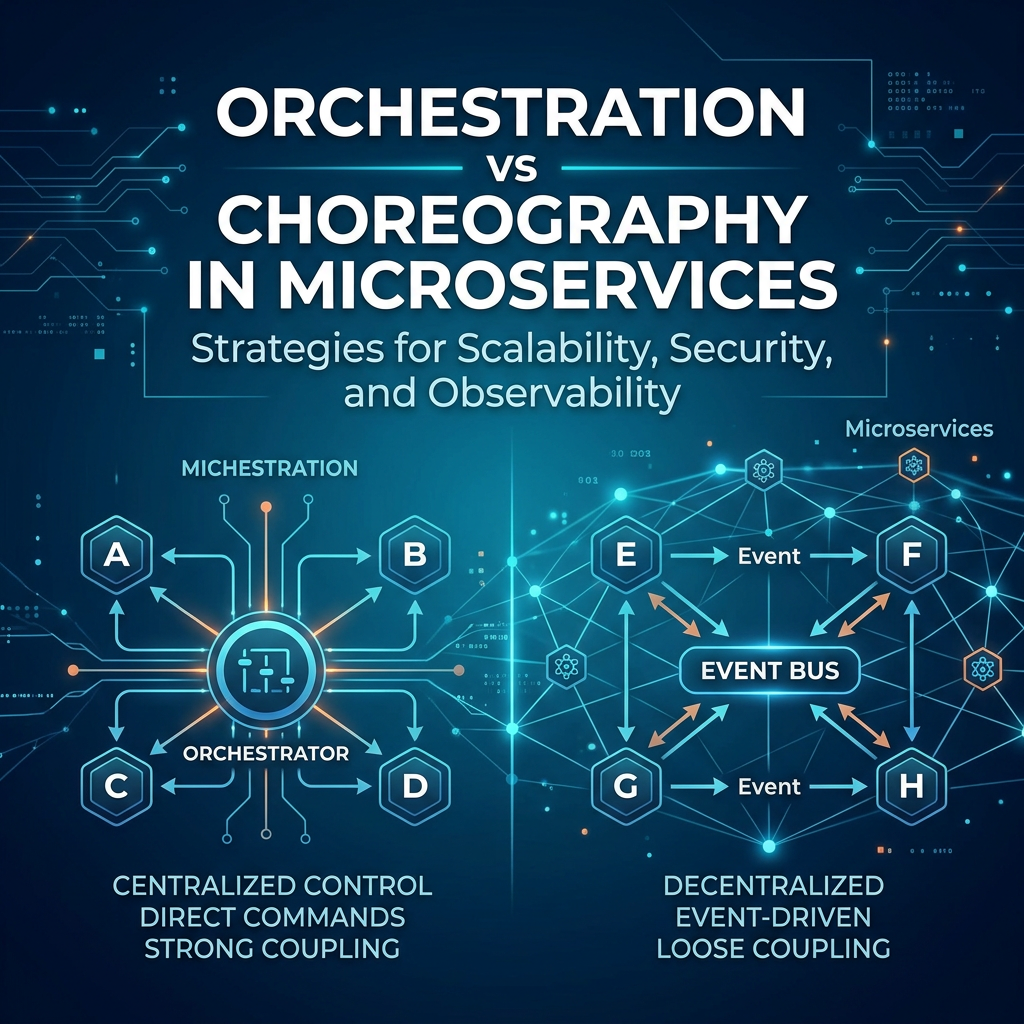
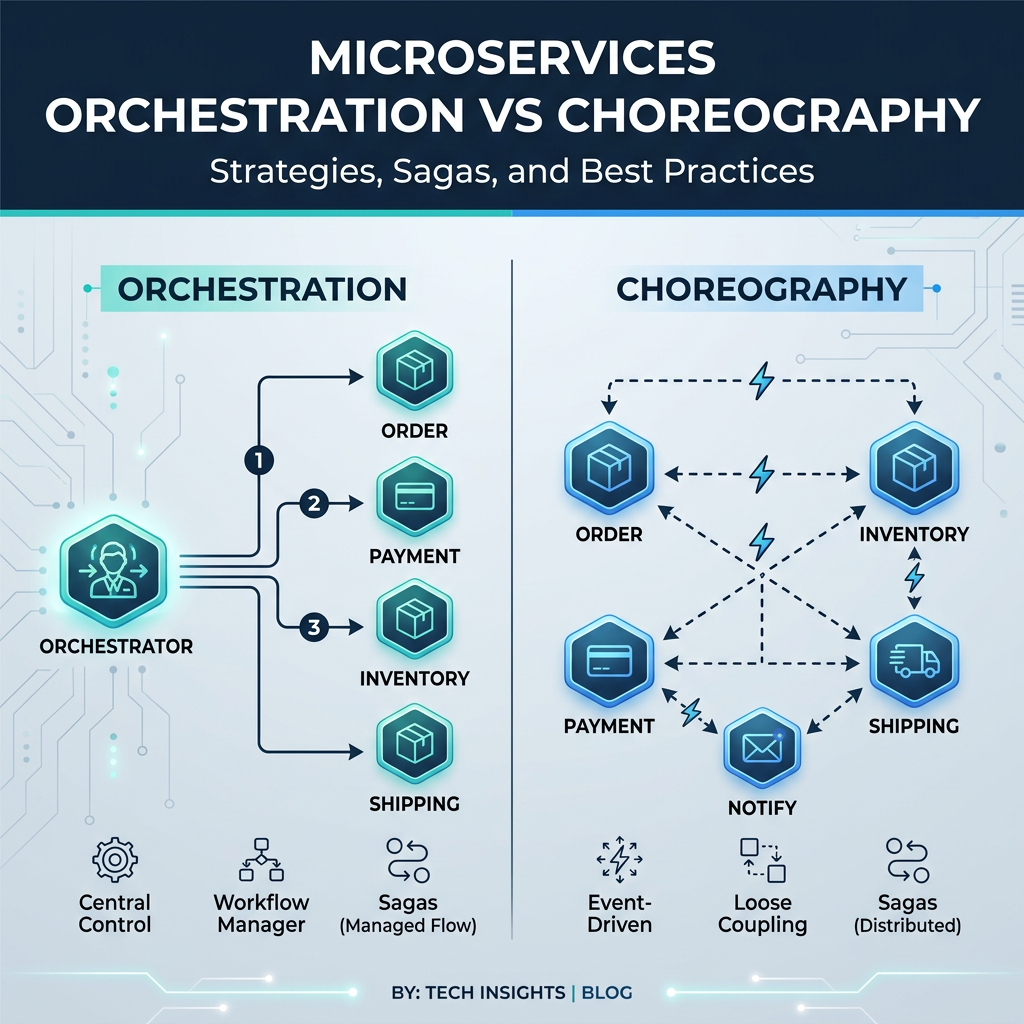
Two primary approaches coordinate microservices workflows: orchestration and choreography. Orchestration relies on a central controller—like a conductor of an orchestra—that manages service calls and workflow order. This centralized design is well suited for complex transactions requiring a comprehensive view and strict execution order, such as multi-step financial approvals.
Choreography, alternatively, distributes control among services that communicate through events without a central orchestrator. Each service reacts autonomously to events, promoting loose coupling, increased scalability, and resilience. However, this decentralization can complicate end-to-end workflow visibility.
Managing Data Consistency in Microservices Architecture
Maintaining data consistency in distributed transactions is challenging. Instead of traditional ACID transactions spanning services, the saga pattern manages workflows as sequences of local transactions. Each local transaction communicates completion or failure through events, triggering compensating transactions as needed.
For example, an online travel booking system using sagas ensures atomicity across flight, hotel, and car reservations by rolling back earlier steps if any service fails. Sagas can be implemented via orchestration (central coordinator manages saga steps) or choreography (services listen and respond to saga events).
Security and Observability: Essential for Failure Management
Microservices ecosystems face vulnerabilities such as network faults, latency, and security breaches. Robust communication strategies must incorporate security measures—like authentication and encryption—to prevent cascading failures from breaches. Observability tools, including logging, monitoring, distributed tracing, and alerting, enable rapid identification and recovery from failures.
For instance, comprehensive tracing can help troubleshoot when an orchestrator's workflow stalls due to an unresponsive service, allowing engineers to isolate and remedy the issue effectively. Israeli research institutions often explore observability and security enhancements tailored for distributed, automated environments common in Israeli banks and hospitals.
Hybrid Patterns and Choosing the Right Coordination Strategy
Many real-world systems benefit from hybrid patterns combining orchestration and choreography. For example, orchestrated control is advantageous for payment workflows requiring auditability, while choreographed events support scalable processes like notifications and updates.
Deciding between orchestration, choreography, or a hybrid approach depends on:
- Workflow Complexity: Orchestration suits complex, conditional workflows; choreography fits simpler, event-driven processes.
- Security and Compliance: Centralized orchestration aids in compliance-focused environments.
- Scalability: Choreography enhances scalability through loose coupling.
- Failure Recovery: Saga-based compensation strategies improve robustness.
- Team Expertise: Operational maturity influences the ability to adopt hybrid models.
In the Israeli context, organizations often collaborate with automation technology providers like does.center to craft hybrid microservices solutions that balance control and agility, meeting both regulatory demands and innovation goals.
Tools for Implementing Your Architecture
Navigating the microservices architecture landscape requires specialized tools. For orchestration, Kubernetes has become the industry standard, providing robust scheduling and scaling capabilities. For event-driven choreography, Apache Kafka and RabbitMQ are essential for reliable message delivery between services. Integrating these tools with an automation platform like does.center can streamline the entire lifecycle, from deployment to real-time observability, ensuring that your distributed components function as a cohesive unit.
Evaluating Benefits within a Microservices Architecture
Orchestration provides a controlled, auditable workflow ideal for applications like payment processing and order fulfillment. Choreography offers decentralization and resilience for applications handling large volumes of loosely coupled events, such as social media platforms or real-time analytics.
Hybrid models allow tailoring coordination strategies across different application areas, combining strengths of both approaches to meet diverse operational requirements.
Practical Banking Example
Consider a banking loan processing system verifying credit scores, account balances, and fraud detection steps. An orchestrated approach centralizes control for sequential validations and compensations on failure. Conversely, a choreographed system emits and responds to events, promoting asynchronous interactions. A hybrid approach blends these methods, orchestrating critical data validation while choreographing notifications and reporting.
Conclusion
Implementing a successful microservices architecture involves evaluating whether orchestration or choreography best fits your workflow complexity, security, observability, scalability, and team capability. The saga pattern is fundamental in ensuring data consistency within either approach. Modern architectures often adopt hybrid coordination models, balancing control and agility to build robust, secure, and observable microservices systems tailored to specific business needs, including those of Israeli industries seeking automation-driven progress.