Marketing Automation for Businesses: Integrating Deterministic Processes with AI
In today’s rapidly evolving digital landscape, implementing effective marketing automation for businesses (אוטומציה שיווקית לעסקים) requires more than just applying AI to every task. While AI is powerful, universal application can often be inefficient and costly. Instead, blending deterministic, rule-based logic with targeted AI interventions can optimize marketing automation for businesses, increase lead conversion, and boost overall campaign reliability. This article explores effective patterns for integrating deterministic processes with AI-driven steps in workflow automation, particularly using platforms like n8n. Such a hybrid approach is increasingly relevant for Israeli businesses seeking scalable and reliable automation solutions. Providers like does.center offer tailored automation services that blend these methodologies to meet local market needs. We also provide practical methods, example templates, and exercises to enhance your understanding.
Understanding Deterministic Logic vs. AI Components
Deterministic or rule-based methods operate on clear, predefined instructions, making them ideal for predictable and structured tasks. Examples include sorting orders by date or triggering alarms when sensor readings exceed thresholds. These steps are typically fast, cost-effective, and highly reliable. Conversely, tasks requiring human-like judgment—such as interpreting natural language, recognizing complex patterns, or making probabilistic predictions—benefit from AI and machine learning. This combination is actively explored by Israeli research institutions to support sectors ranging from healthcare to logistics.
The Pitfalls of Overusing AI in Workflows
It’s tempting to apply AI to every step once it proves useful in some instances, but this approach can backfire. For example:
- Financial transactions: AI can detect fraud, but recording and posting transactions are best handled with deterministic rules, a practice common in Israeli banks.
- Customer service: AI chatbots are effective for initial inquiries, while escalation and backend processing require clear-cut logic.
- Workflow platforms like n8n: Excessive AI use slows processes and raises computational costs, even when simpler rule-based steps suffice.
Recognizing each component’s unique needs is key to maximizing the ROI of your marketing automation for businesses (אוטומציה שיווקית לעסקים)—a principle well applied by automation providers such as does.center, who support various Israeli industries in optimizing workflows through hybrid models.
Strategic Approach to Marketing Automation for Businesses
To maximize the effectiveness of your marketing automation for businesses, identify where deterministic logic excels and where AI’s adaptability adds value. Follow these steps:
Leveraging Hybrid Logic for Advanced Lead Scoring
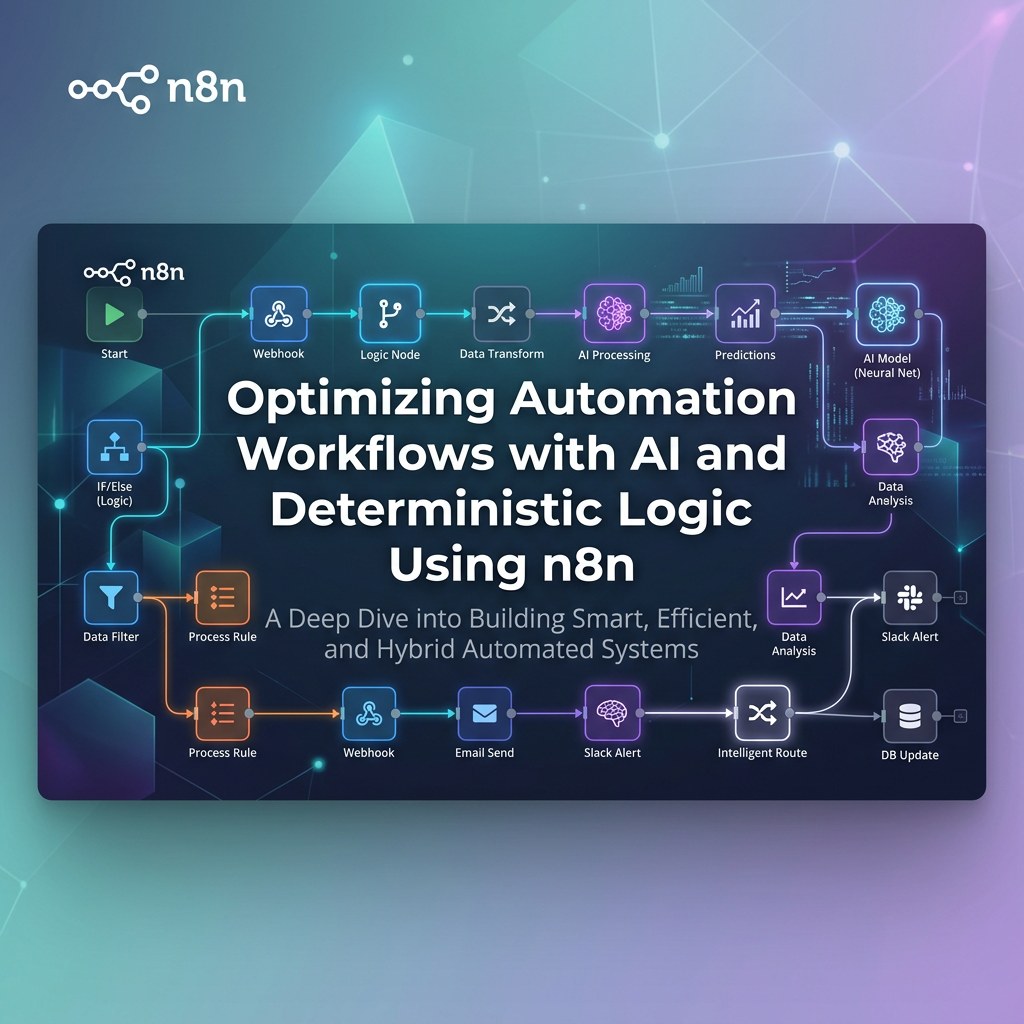
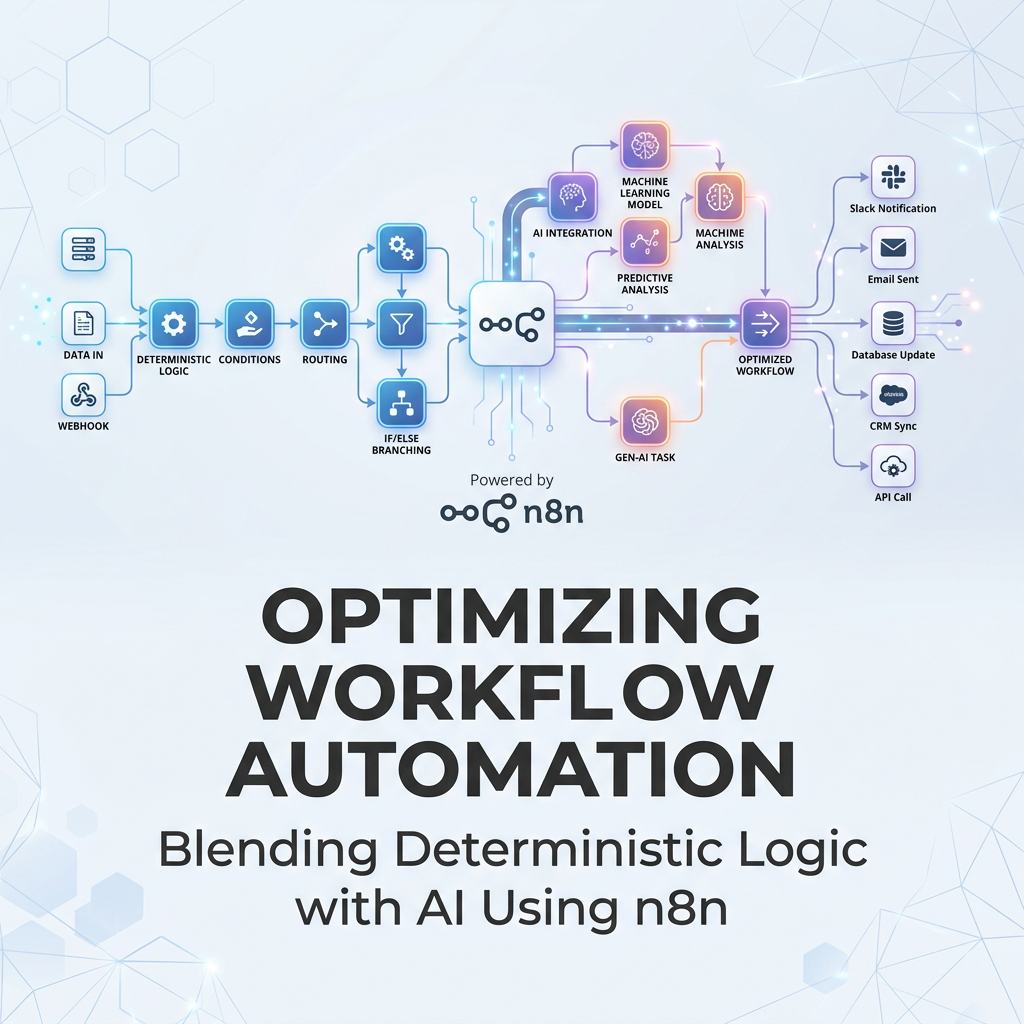
When implementing marketing automation for businesses (אוטומציה שיווקית לעסקים), lead scoring is a prime candidate for the hybrid approach. Instead of sending every incoming lead directly to an AI model for evaluation—which can be costly at scale—use deterministic logic to filter by basic criteria like geography, industry, or company size. Once a lead meets a baseline threshold, trigger an AI step using n8n to analyze the lead's specific website behavior or LinkedIn profile sentiment. This ensures your sales team receives high-quality, pre-qualified insights without wasting resources on low-potential contacts.
Scaling Hyper-Personalized Campaigns with n8n
Effective marketing automation for businesses thrives on personalization. By integrating n8n with your CRM, you can build workflows that pull specific customer purchase history (deterministic) and combine it with AI-generated personalized greetings or tailored product descriptions. This hybrid method allows you to generate dynamic content for thousands of users simultaneously while maintaining a human-like touch. Businesses using this approach often see significant improvements in open rates and customer engagement compared to static, rule-only email sequences.
1. Mapping and Segmenting the Process
Break down your workflow into segments. Use deterministic logic for routine validation, data cleaning, or calculations, and reserve AI for ambiguous or complex tasks. For example, let deterministic logic handle customer order validation, while AI analyzes customer sentiment from feedback.
2. Integrating Deterministic and AI Elements
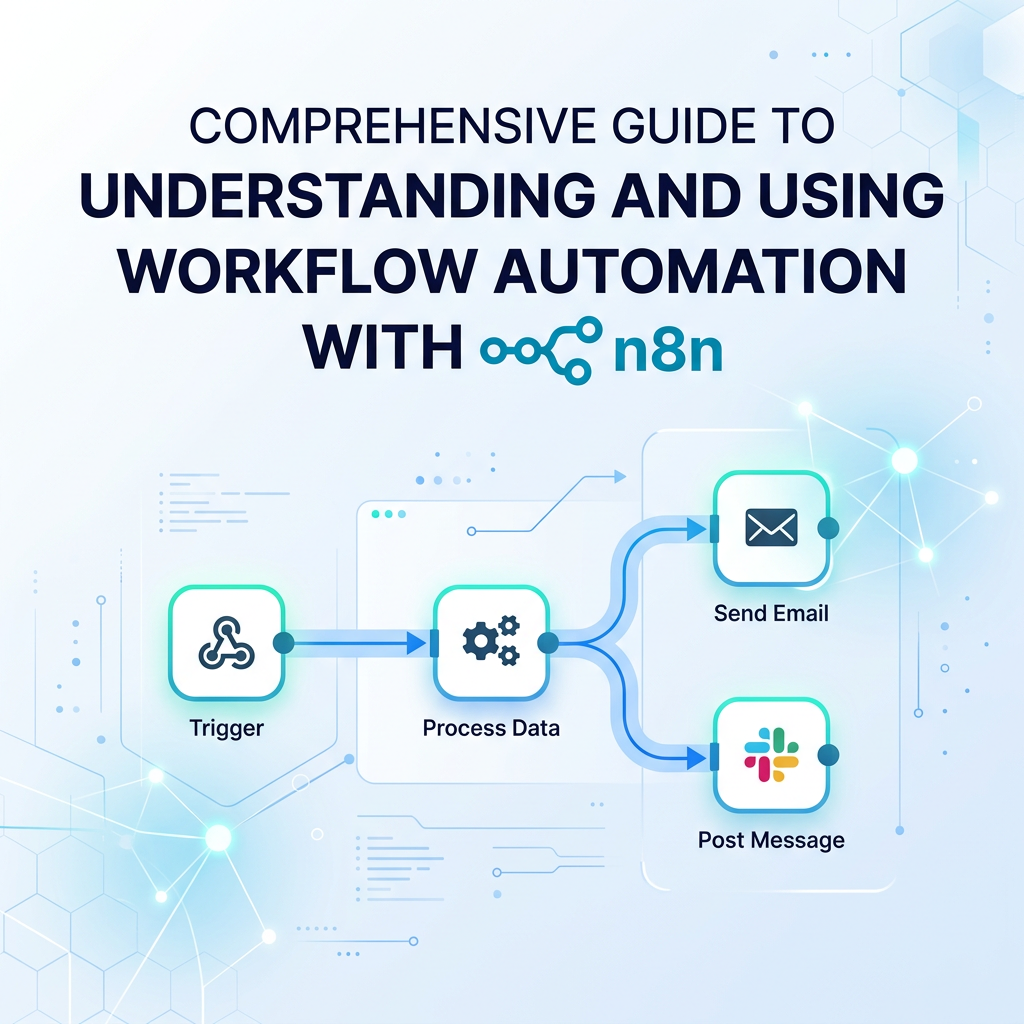
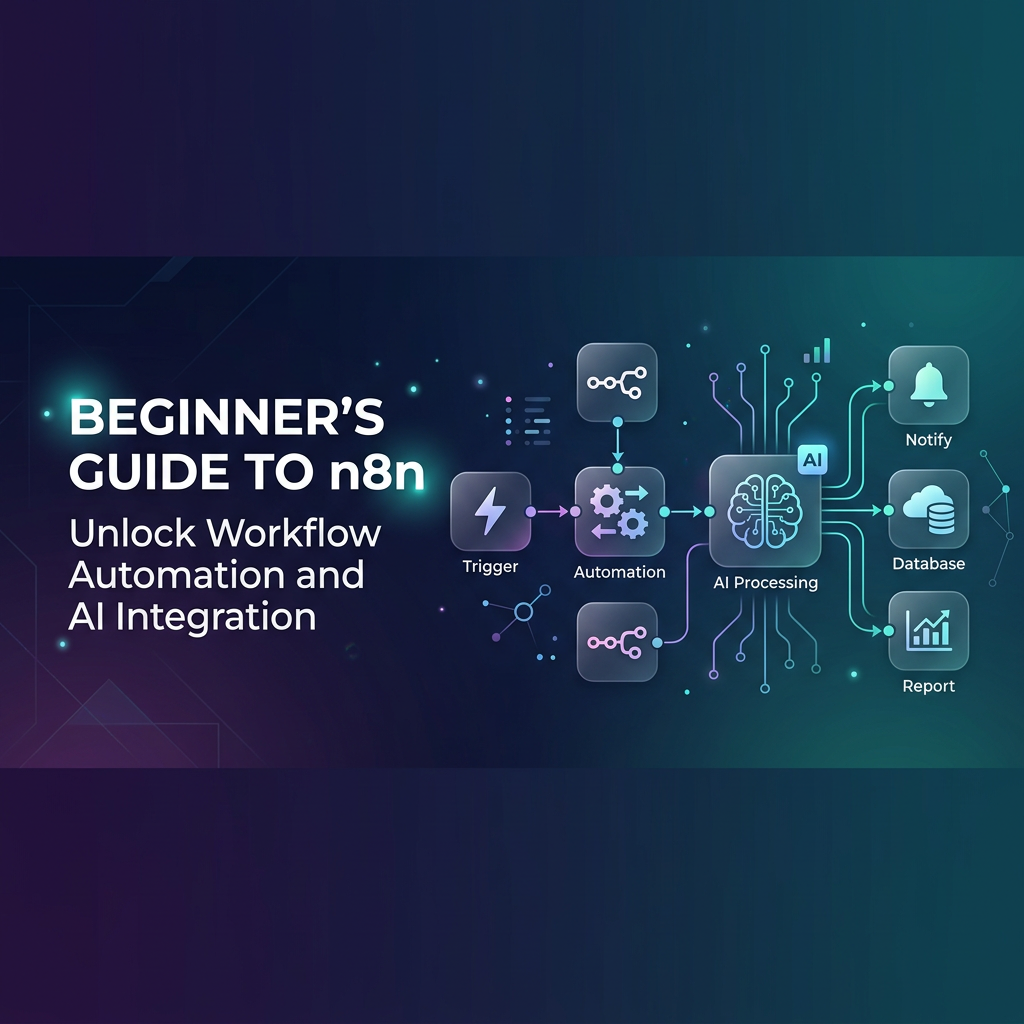
Platforms like n8n enable creating workflows combining multiple actions—branches for rule-based logic with defined conditions alongside AI API calls for nuanced analysis or predictions. This ensures processes remain efficient without unnecessary AI usage.
3. Scalability and Cost Optimization
Limiting AI to critical tasks improves speed and cost-efficiency since deterministic steps use fewer computational resources. For instance, in marketing automation, deterministic logic can manage email segmentation and scheduling, while AI optimizes campaign tactics by analyzing response patterns.
Hands-On Exercises and Practical Templates
Apply these strategies via downloadable n8n templates and exercises that offer:
- Step-by-step guides to set up mixed workflows.
- Example cases with data validation followed by AI-powered predictions.
- Tips on integrating external AI services through APIs.
Exercise: Mastering Marketing Automation for Businesses with n8n
- Define the process—for example, automating customer review handling starting with review collection.
- Add a deterministic branch to filter reviews containing specific keywords using string-matching rules.
- Include an AI step for nuanced or ambiguous reviews, applying AI-driven sentiment analysis to gauge satisfaction and identify issues.
- Combine outcomes to trigger follow-up actions like alerting customer service or escalating complaints.
This exercise highlights how selective AI use balances speed and sophistication in automation. Such approaches are increasingly adopted by Israeli hospitals and logistics companies aiming to improve operational workflows.
Benefits of Combining Deterministic Logic and AI
- Improved Work Efficiency and Reliability: Deterministic steps ensure consistency, while AI handles nuanced tasks, creating a smoother professional workflow.
- Enhanced Efficiency and Speed: Avoiding unnecessary AI reduces latency and resource use.
- Optimized Resource Allocation: Selective AI use lowers API calls and cloud expenses, crucial for cost control.
- Scalability and Flexibility: Easily scale deterministic parts while refining AI components as your business grows.
Real-World Use Cases
- Finance: Rule-based triggers handle routine transactions; AI detects fraud.
- Healthcare: Deterministic logic manages standard monitoring; AI diagnoses imaging anomalies.
- E-commerce: Order processing is automated via rules; AI enhances personalization and predictions.
These examples demonstrate the effectiveness of hybrid workflows in various industries and reflect the trends seen across Israeli sectors.
Why Business Management Automation is Critical for Modern Scaling
In the current competitive landscape, business management automation (אוטומציה לניהול עסק) is no longer a luxury but a necessity for scaling. By shifting from manual oversight to automated systems, organizations can ensure that core operations—such as lead routing, financial reconciliation, and inventory management—run without human error. This hybrid approach, using tools like n8n, allows for a 'human-in-the-loop' configuration where AI handles the creative or analytical heavy lifting, while deterministic logic maintains the integrity of the underlying business rules. For Israeli companies looking to expand globally, this methodology provides the structural stability needed to manage diverse markets and complex operational requirements efficiently.
The ROI of Work Efficiency through Hybrid Models
To truly understand the benefits of these hybrid models, businesses must measure their work efficiency gains. This involves tracking the time saved on manual data entry versus the computational costs of AI API calls. By shifting repetitive tasks to deterministic nodes, teams often see a 40-60% reduction in processing time. In the Israeli tech ecosystem, where agility is key, using n8n to balance these factors ensures that your work efficiency is a measurable metric that drives real growth rather than just a conceptual goal.
Best Practices for Implementation
- Clear Separation: Keep deterministic and AI processes distinct for easier troubleshooting and optimization.
- Iterative Testing: Test rule-based logic and AI components independently and together due to AI's probabilistic nature.
- Documentation and Monitoring: Document decision logic and monitor workflows for deviations to facilitate maintenance.
- Continuous Improvement: Use feedback loops to refine AI and deterministic methods as they evolve.
Conclusion
Integrating deterministic logic with AI isn’t a compromise but a strategic approach combining the strengths of both. Using rule-based logic for structured tasks alongside AI where human-like decision-making is critical delivers faster, cost-effective, and robust systems. Platforms like n8n offer the flexibility and tools to build such hybrid workflows efficiently. With growing interest from Israeli banks, hospitals, and logistics companies, and support from providers like does.center, this balanced strategy streamlines operations and aligns automation closely with business goals, merging precision, speed, and innovation.